HAMR Energy has completed a AUD 10 million Series A funding round, securing backing from Airbus, Qantas and global industrial firm thyssenkrupp Uhde, as the company moves to advance a pipeline of low carbon liquid fuel projects.
In a news release, the Australian-based company said the investment would support the development of projects that convert plantation forestry residues into low carbon fuels aimed at reducing emissions from hard-to-abate transport sectors such as aviation and shipping.
As part of the broader project framework, Honeywell will provide its UOP eFining process technology to enable the production of renewable fuels from methanol, which HAMR Energy said could be used to produce sustainable aviation fuel.
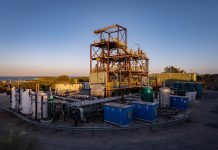
HAMR Energy’s flagship Portland Renewable Fuels project in regional Victoria is designed to produce up to 300,000 tonnes of low carbon methanol each year using residues from the local plantation forestry industry.
The company said the methanol could be used directly as a marine fuel or further processed into sustainable aviation fuel, contributing to domestic fuel supply and emissions reduction efforts.
David Stribley, co-founder of HAMR Energy, said the funding round represented “a pivotal moment for HAMR Energy and for Australia’s clean energy future,” adding that the backing of large industrial and aviation partners would help the company advance projects intended to deliver lower-carbon fuels at scale.
The investment by Qantas and Airbus will be made through their joint Australian Sustainable Aviation Fuel investment fund, with existing investors also recommitting.
Fiona Messent, Qantas Group chief sustainability officer, said building local sustainable aviation fuel supply was “essential to meeting our decarbonisation targets,” while Airbus chief representative Stephen Forshaw said the company viewed methanol-based SAF as “a very interesting technology pathway” for the sector.
thyssenkrupp Uhde chief executive Nadja Håkansson said the project demonstrated how collaboration between developers, technology providers and future offtakers could help translate renewable fuel concepts into industrial-scale projects, while Honeywell UOP president Rajesh Gattupalli said the agreement marked the first commercial licence in the Pacific region for its eFining technology applied to sustainable aviation fuel production.