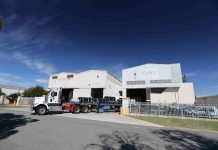
The National Reconstruction Fund Corporation has committed $75 million in equity funding to Alpha HPA, supporting the expansion of advanced manufacturing of high purity alumina at the company’s Gladstone operation in Central Queensland.
In a statement, the National Reconstruction Fund said the investment would support Alpha HPA’s proprietary processing technology and contribute to the development of domestic manufacturing capability in a critical mineral used across high-growth industries.
Alpha HPA produces ultra-high purity alumina for use in manufacturing applications including semiconductors, lithium-ion batteries and pharmaceuticals. High purity alumina was added to Australia’s Critical Minerals List in 2022 and is in increasing demand due to its role in cooling high-powered computer chips used in data centres.
According to the National Reconstruction Fund, the $75 million commitment formed part of a $225 million funding round and acted as a cornerstone investment, helping attract a further $150 million from private investors.
National Reconstruction Fund chief executive officer David Gall said the investment aligned with the fund’s mandate to strengthen Australia’s manufacturing capability and supply chain resilience.
“This investment backs a truly innovative Australian company but also improves Australia’s economic security and supply chain resilience around a critical mineral that is key to the future economy,” Gall said.
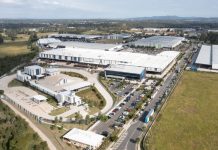
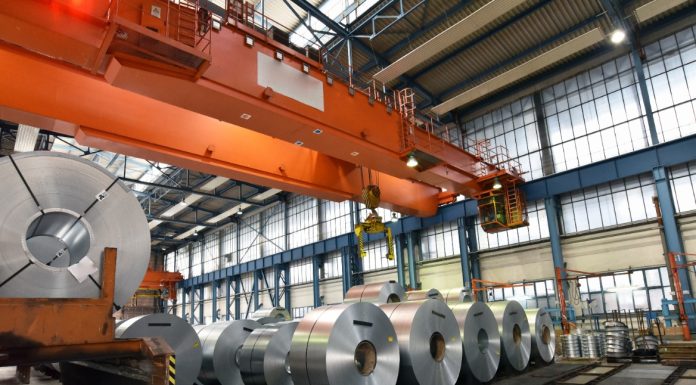
The funding will be used to progress Stage Two of Alpha HPA’s Gladstone project, which involves the construction of what the company says will be the world’s largest single manufacturing facility for high purity alumina, with capacity to produce 10,000 tonnes per annum of HPA-equivalent product.
Once completed, it is expected to be Australia’s first commercial-scale high purity alumina manufacturing facility.
The company has operated a smaller commercial production facility at the site since 2022. The project is located within the Net Zero Economy Agency’s Central Queensland Priority Region.
The National Reconstruction Fund said the investment would support job creation and regional development, with the expansion expected to generate up to 420 jobs during construction and commissioning.
Once operational, the facility is expected to support around 120 ongoing full-time roles over an operational life of more than 25 years. Alpha HPA currently employs approximately 130 people.
Gall said sustainability outcomes were also a factor in the investment decision. “Alpha’s unique IP makes lower temperature processing possible,” he said.
“Coupled with the project’s use of 100 per cent renewable electricity this means it produces around 70 per cent less emissions than current methods of producing HPA.”
Alpha HPA managing director Rob Williamson said the National Reconstruction Fund’s backing was an endorsement of the company’s manufacturing strategy.
“NRFC’s investment is a strong endorsement of Alpha HPA’s strategy, technology and role in building sovereign manufacturing capability in Australia,” Williamson said.
Williamson said the project would position Australia further along global supply chains. “Our Gladstone HPA First Project positions Australia as a trusted supplier into diversified global supply chains,” he said.
Alpha HPA has previously secured funding for Stage Two of the project, including a $320 million debt facility from the Northern Australia Infrastructure Facility and Export Finance Australia, as part of approximately $590 million raised to date.
The content of this article is based on information supplied by Alpha HPA Ltd. For more information, please refer to the official company announcement and communications from Alpha HPA. Please consult a licensed and/or registered professional in this area before making any decisions based on the content of this article.