The Australian National Maritime Museum has announced a summer display focusing on the production history and boatbuilding legacy of Norman R Wright & Sons, showcasing vessels designed and built by the Queensland firm over nearly a century of operation.
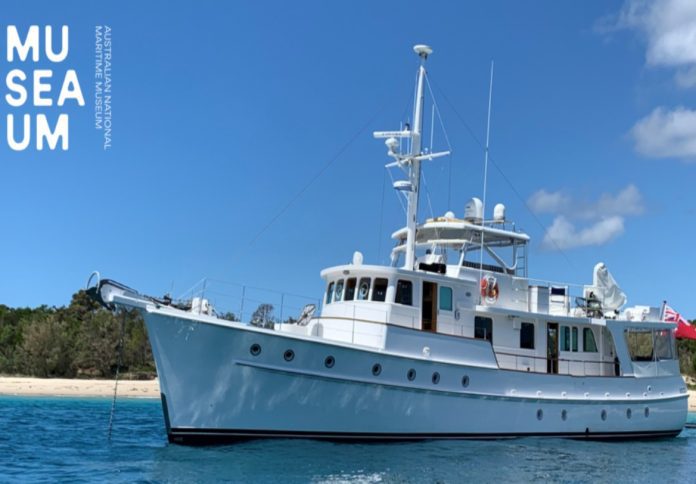
According to the museum, the display, titled Crafting a Legacy – Icons of Australian Boatbuilding, will run from 16 to 20 January and will feature 14 Wright-designed vessels dating from 1913 to 2010.
The exhibition forms part of the museum’s summer program and aims to present the evolution of production techniques and craftsmanship associated with one of Australia’s longest-standing boatbuilding families.
The museum said Norman R Wright & Sons was founded in 1909 by Norman Wright Snr in Newstead, Brisbane, beginning as a small boatyard before expanding its production capabilities across pleasure craft and workboats.
Over three generations, the company said it had developed a reputation that extended beyond Australia, with many of its vessels remaining in service.
As outlined in the media release, the company’s development was shaped by key family figures, including Norman Wright Jnr and Ron Wright, Queensland’s first naval architect and an Olympic sailor.
It noted that their involvement coincided with changes in boatbuilding design and production approaches as the business grew.
The museum reported that during World War II the Wright shipyard played a role in the Allied war effort, refitting vessels and building new craft for military use. In the post-war period, increased demand led to expanded production of trawlers, luggers and vessels for Queensland’s growing tourism sector.
In 1953, the company said it had adopted the name Norman R Wright & Sons Pty Ltd, reflecting its family structure and ongoing commitment to boatbuilding.
The third generation, represented by Bill and Ian Wright, continued operations as production methods and technologies evolved, including the construction of yachts such as Beryl May (later South Pacific II) and Bali Hai during the 1960s.
The Australian National Maritime Museum said the 1990s marked a renewed phase for the company, with production including new-generation City Cats alongside pleasure and commercial craft.
The museum described the display as an opportunity for visitors to examine how Australian boatbuilding practices and production capabilities have changed over time, while highlighting the continuity of a family-run enterprise within the maritime industry.