Australian print businesses are rethinking manufacturing strategies in 2026, with automation and digital inkjet technologies reshaping how production moves through the factory floor, according to Jet Technologies.
In a statement, the company said ongoing labour shortages, rising turnaround expectations and increasing job complexity are prompting printers to reduce manual intervention and streamline manufacturing workflows.
Jack Malki, Director at Jet Technologies, said the most significant change underway is a structural shift toward production environments with fewer touchpoints and greater reliance on digital platforms.
“Printers are being asked to deliver more jobs, in more variations, with fewer people involved at every step,” Malki said. “That combination simply isn’t sustainable with traditional, labour-intensive workflows, and it’s why we’re seeing sustained momentum behind digital print — particularly inkjet.”
According to Jet Technologies, digital inkjet is increasingly being assessed not only on print quality or run length, but on its ability to simplify manufacturing processes and reduce manual handling across the business.
“In many cases, the difference in touchpoints compared to conventional print is substantial,” Malki said. “Digital print allows work to move through the business with far less manual handling.”
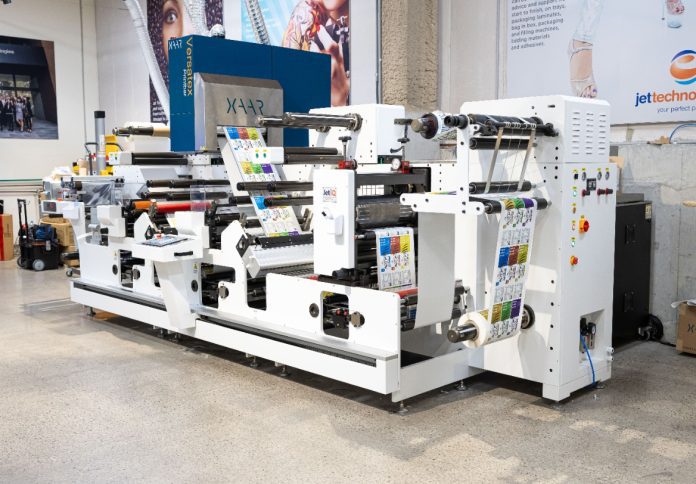
The company noted that presses alone are not driving change. Printers are also investing in automation beyond print engines, including Management Information Systems, automated artwork intake, pre-press preparation, variable data workflows and finishing systems.
“Automation is often underestimated,” Malki said. “The biggest gains happen when everything is connected. Even simple job-memory functions can save an enormous amount of time when complexity increases.”
Labour availability remains a consistent pressure point across labels, packaging and commercial print, Jet Technologies said, citing an ageing workforce and ongoing challenges in attracting and training younger staff.
“There isn’t a single business we work with that isn’t feeling labour pressure in some form,” Malki said. “It’s universal, and it’s the main driver behind the structural changes we’re seeing.”
As a result, the company said digital platforms and automation are increasingly viewed as essential to maintaining output, consistency and quality with fewer skilled operators.
Jet Technologies also reported growing interest in digital embellishment, particularly in labels. One emerging area highlighted by the company is label contouring, where inkjet embellishment creates multi-height, tactile finishes.
“Once brand owners see contoured, tactile labels, flat print starts to feel very ordinary,” Malki said. “It adds a level of engagement that’s difficult to achieve any other way, and the response from brands has been extremely strong.”
On sustainability, Jet Technologies said adoption remains uneven across the industry, varying between segments and even among customers in the same category.
“There’s a very broad spectrum, from minimal change through to genuinely embedded sustainability strategies,” Malki said. “In the past, there was a lot of re-labelling of existing products, but that’s starting to give way to more meaningful change.”
He added that recent progress has been supported by new materials offering improved environmental outcomes without compromising performance or cost.
“When a sustainable solution is accessible and commercially realistic, the industry does move,” Malki said, citing laminating films containing recycled content as an example of products that have moved from niche to mainstream.
Looking ahead, Jet Technologies said print businesses that continue investing in digital inkjet, automation and connected manufacturing workflows are likely to be better positioned to manage labour constraints while meeting increasing demands for speed, variation and complexity.