Manufacturing-focused businesses are increasingly turning to transportable buildings to address cost, time and compliance pressures, according to Instant Products Group, as demand grows for modular facilities across multiple industrial sectors in Western Australia.
In a media release, the group said the shift is illustrated by battery recycling company Enecell, which required a customised negative-pressure room to commence operations at its new manufacturing facility.
Enecell founder Paul Owens said speed to market and budget constraints were critical considerations when planning the site.
According to Instant Products Group, Enecell opted for a modular, transportable building that could be designed, manufactured and installed in less than half the time of a traditional permanent structure, delivering a reported cost saving of about $400,000.
“Dealing with lead-acid batteries, our business has a strong focus on hygiene management control and adhering to strict workplace health and safety standards,” Owens said.
“The modular building not only met our business requirements, but also compliance requirements from the Environmental Protection Authority, Department of Water and Environmental Regulation and Worksafe.”
“All [of this was] delivered faster, and for less than if we had built a permanent structure,” he said.
Instant Products Group said the building was completed and installed within four months, allowing Enecell to begin manufacturing operations in July this year.
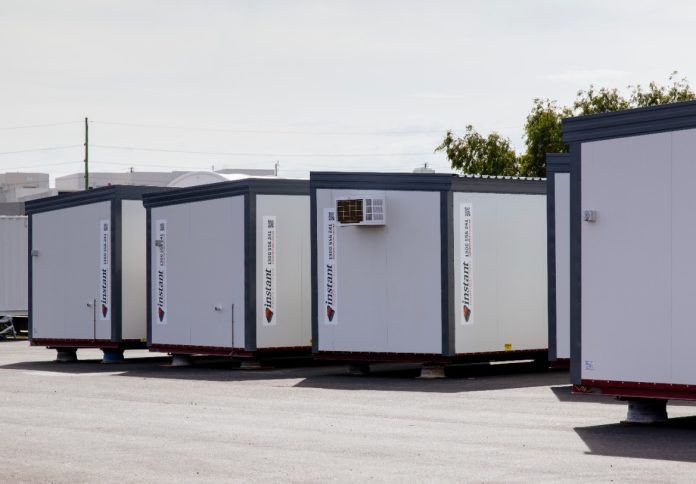
Managing Director Scott Rawson said Enecell’s project reflects a broader trend the company is seeing among manufacturing and industrial clients, with Instant Products Group currently manufacturing between 30 and 40 transportable buildings each month to meet demand.
“We know there are still significant wait times in the construction industry, and as was the case with Paul, some businesses simply don’t have the time to wait,” Rawson said.
He said demand for transportable buildings is coming from a wide range of uses, including custom industrial facilities, site offices, plant rooms and lunchrooms, and is no longer limited to the resources sector.
“We’re seeing growing demand for transportable buildings both to hire and purchase, from custom designs like we’ve seen at Enecell, through to site offices, plant rooms and lunchrooms,” Rawson said. “And the demand is coming from multiple sectors, not just mining, which shows there’s underlying strength in the WA economy.”
According to Instant Products Group, transportable buildings offer manufacturing businesses flexibility to expand or reconfigure facilities as operations change, as well as quality control benefits through off-site manufacturing in a controlled environment.
The company said modular designs can also be tailored to meet specific industry requirements.
Enecell now has three modular buildings on site, with additional units used for office space and a lunch area. Owens said aesthetics were a secondary consideration compared with operational efficiency.
“From the outside our office doesn’t look flashy, but that’s also not the focus of our business,” he said. “We want to invest in the actual ‘doing’, in the equipment, the technology and our operations.”
“Investing in a transportable building freed up valuable capital to allow us to do exactly that,” he added.
Rawson said managing future demand remains a key challenge for Instant Products Group, particularly in maintaining sufficient stock to respond quickly to customer needs.
“The advantage of transportables is in the ability to have a building almost as soon as you need it,” he said. “We’re making sure we have enough stock on hand to deal with those last-minute requests, whether it’s rapid expansion, project delays or simply a change in requirements.”
“It’s a challenge, but it’s also an incredible opportunity for our business,” Rawson said.