Tag: Science Advances

Monash University researchers unveil ultra-thin membrane for cleaner energy systems
Engineers at Monash University have developed an ultra-thin membrane designed to improve the efficiency of fuel cells operating at high temperatures, in a breakthrough the researchers say could support wider use of clean energy technologies in transport and industry.
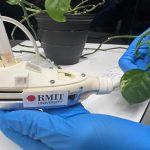
Manufacturing breakthrough uses sound waves to create ‘plant sunscreen’
RMIT University researchers have developed a sound wave-based manufacturing technique capable of creating and applying protective coatings on delicate surfaces, including living plant leaves, according to a new study published in Science Advances.

Rice University researchers forge path to sustainable 3D-printed wood
Researchers at Rice University have harnessed the power of 3D printing to create sustainable wood structures, presenting a greener alternative to conventional manufacturing methods.

Int’l team converts polyethylene waste into valuable chemicals
An international team of experts has devised an innovative method to repurpose polyethylene waste (PE), transforming it into valuable chemicals through light-driven photocatalysis.

Vaxxas unveils positive clinical trial results for needle-free COVID-19 vaccine
Australia biotechnology company Vaxxas said it achieved positive interim results from a Phase I human clinical trial with the first needle-free COVID-19 vaccine candidate.

UNSW engineers develop new tool to measure structure of materials
Engineers at UNSW Sydney have developed a new electron spin-measuring device that could help scientists understand the structure and purpose of materials better.

UNSW Sydney-led research paves the way for novel type of quantum bit
A team led by Professor Andrea Morello at the University of New South Wales (UNSW) in Sydney has just exhibited the operation of a new type of quantum bit called a 'flip-flop' qubit, which combines the quantum properties of single atoms with easy controllability using electric signals similar to those used in standard computer chips.
New method developed to make cheaper, more efficient EV fuel cells
Researchers from the UNSW Science School of Chemistry have developed a new technique for creating tiny 3D materials that could potentially help make cheaper and more sustainable fuel cells like hydrogen batteries.

For the longest time: quantum computing engineers set new standard in silicon chip performance
UNSW engineers have substantially extended the time that their quantum computing processors can hold information by more than 100 times compared to previous results.
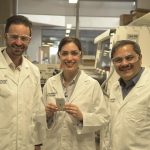
Supercharging tomorrow: Monash researchers develop world’s most efficient lithium-sulphur battery
Media Release
Monash University researchers have developed the world's most efficient lithium-sulphur battery, capable of powering a smartphone for five continuous days.
Prototype cells...







Featured Article
The economic forces driving manufacturing’s next cycle

Australia’s manufacturing sector entered 2026 with improving momentum, but renewed global disruption is again testing resilience across the industry.