A 3D-printed helmet padding system for explosive ordnance disposal (EOD) technicians is being developed using additive manufacturing, with a focus on data-driven quality assurance, amsight said in a media release.
According to amsight, the padding is a key component of EOD helmets, contributing to energy absorption, secure fit and wearer comfort.
While the outer shell protects against hazards, amsight said the internal padding must meet stringent standards for quality, reproducibility and documentation.
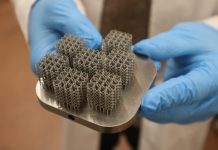
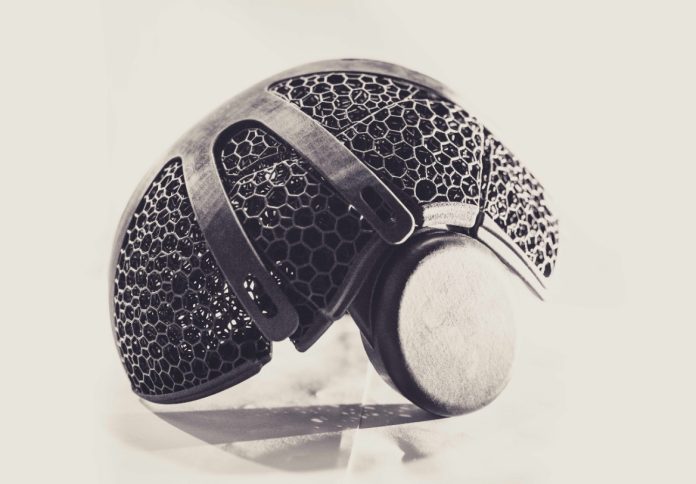
The system, developed by rapid product manufacturing GmbH (rpm), replaces conventional foam with a lattice-based structure that allows mechanical properties such as stiffness and damping to be tailored for different areas of the head.
amsight said this design improves protective performance, reduces weight, enhances comfort, supports ventilation and simplifies cleaning.
“Additive manufacturing allows rpm to create padding geometries with defined damping structures and reproduce them consistently,” Dr. Jörg Gerken, technical managing director at rpm, said in the release. “The combination of additive manufacturing and data-driven quality assurance plays a central role in this.”
amsight said its software monitors and analyses process and part data across the additive manufacturing chain, enabling early detection of deviations and proactive intervention.
The company said this contributes to reproducible mechanical and functional performance, while also supporting documentation, traceability and continuous process optimisation – requirements it described as essential for safety-critical applications.
The padding components are manufactured on industrial 3D printing systems supplied by Farsoon. amsight said the systems’ open architecture and precisely adjustable process parameters enable controlled implementation of complex padding geometries and reliable serial production.
Fraunhofer Institute for Manufacturing Engineering and Automation IPA provided scientific support, amsight said, assisting rpm in applying data-driven quality assurance and analysing production data.
Fraunhofer IPA told amsight that this approach enables early detection of deviations, targeted process stabilisation, and consistent quality of additively manufactured padding.
amsight said the project demonstrates how additive manufacturing, industrial hardware and software-based quality monitoring can be combined to develop customised components for safety-critical applications.
“A structured, data-driven quality backbone helps make additive manufacturing a dependable production technology for the future,” the company said.