Australia’s national science agency CSIRO has released the draft GenCost 2025-26 Report for public consultation, outlining updated estimates on the cost of new-build electricity generation and pathways to meeting Australia’s renewable energy and emissions targets.
According to CSIRO, the draft report continues its assessment of capital costs and delivered electricity costs across individual generation technologies, while introducing a new system-level approach that examines the electricity generation mix and average cost of electricity required to achieve 82 per cent renewable energy by 2030 and net zero emissions by 2050.
CSIRO said its modelling shows solar photovoltaic and onshore wind technologies form the basis of the lowest-cost generation mix under both approaches.
The draft findings indicate battery storage technologies continue to record significant cost reductions, while large-scale solar has experienced its first increase in capital costs in three years.
CSIRO reported that onshore wind costs are showing early signs of stabilisation, while nuclear, coal and open-cycle gas generation costs have increased due to higher turbine technology costs.
To meet the 2030 renewable energy target, CSIRO estimated electricity costs of around $91 per megawatt-hour including transmission, or about $81 per megawatt-hour for generation alone.
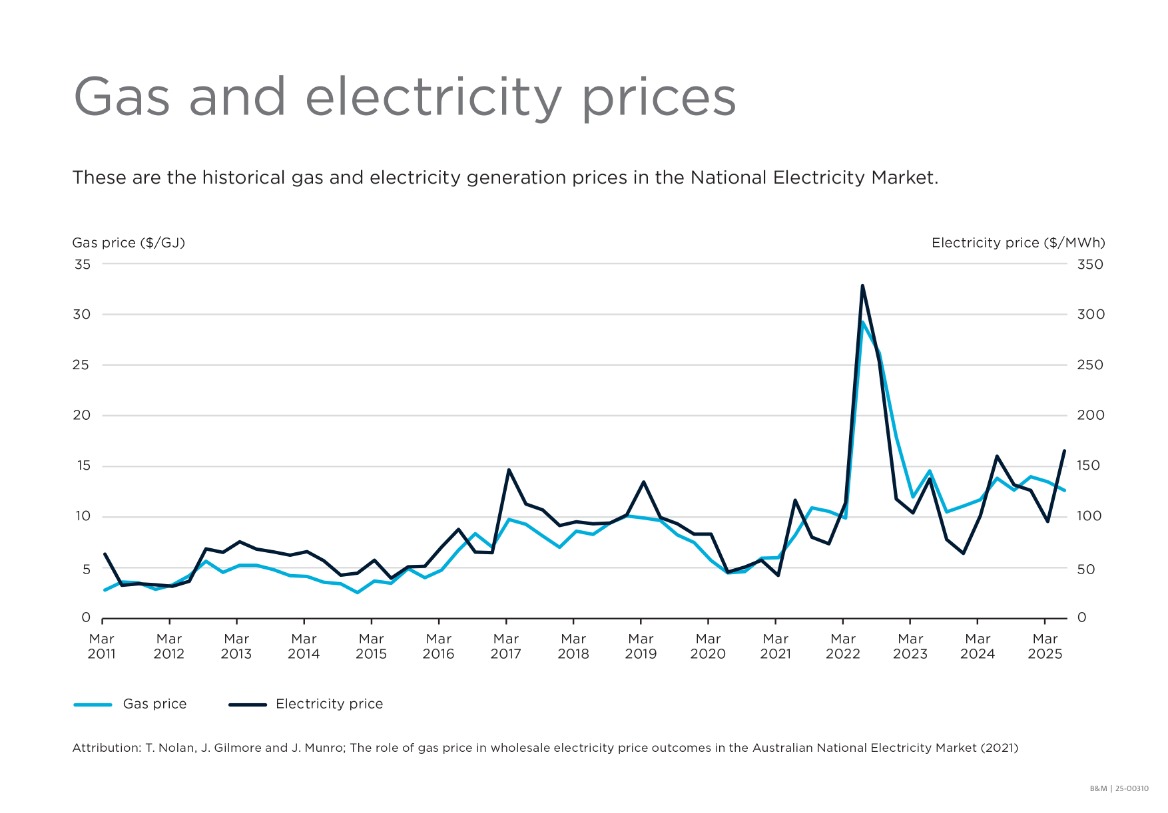
For 2050, the cost of delivering net zero emissions was projected at $135–$148 per megawatt-hour including transmission, or $114–$124 per megawatt-hour for wholesale generation only, slightly below recent National Energy Market generation prices.
CSIRO also reported that achieving net zero by 2050 would require electricity sector emissions intensity to fall to between 0.02 and 0.05 tonnes of carbon dioxide equivalent per megawatt-hour, compared with around 0.5 tonnes currently.
The agency said eliminating all electricity sector emissions would be more costly than reducing emissions elsewhere in the economy, while higher electricity emissions intensity would increase the overall cost of reaching net zero.
The draft report introduces a new system levelised cost of electricity method, supported by a CSIRO-developed Simple Electricity Model, following stakeholder feedback.
CSIRO said the approach assesses the lowest-cost mix of generation technologies and transmission rather than comparing individual technologies in isolation.
CSIRO Chief Energy Economist and GenCost Project leader Paul Graham said the report reflects an expanded approach to electricity cost analysis.
“GenCost has evolved from delivering verifiable cost data on individual technologies to now also providing system modelling of the future generation mix and average cost of wholesale electricity,” he said.
CSIRO Director of Energy Dr Dietmar Tourbier said GenCost plays an important role in supporting informed decision-making.
“Under any scenario, there is a cost associated with the build of Australia’s future electricity system and GenCost provides trusted, evidence-based information to help stakeholders understand that cost,” he said.
CSIRO said it has collaborated with the Australian Energy Market Operator on GenCost since 2018 and invited stakeholders to review the draft report and provide feedback through the consultation process.