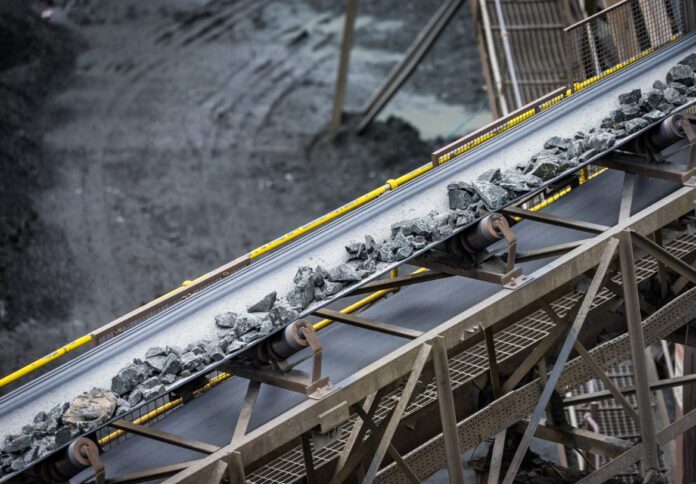
Australia’s manufacturing and resource capabilities have been bolstered by the latest Australian Government stocktake of mineral resources, which points to strong growth in exploration, production and economic potential for critical minerals essential to advanced manufacturing and clean energy technologies.
In a media statement, the Australian Government said the 2025 edition of Australia’s Identified Mineral Resources (AIMR), released by Geoscience Australia, reinforces the nation’s position as a reliable global supplier of critical minerals used in high-technology manufacturing, defence and national security applications.
Minister for Resources and Northern Australia Madeleine King said the latest data demonstrates the scale of Australia’s geological endowment and the strength of its resources sector.
“Australia’s diverse geology and abundant mineral resources continue to underpin our economic and national security while supporting secure global supply chains with our strategic partners,” Minister King said.
She noted that critical minerals and rare earth elements are “vital to high technology manufacturing, defence applications, and clean energy technologies such as solar panels, wind turbines and electric vehicles.”
“The latest edition of Australia’s Identified Mineral Resources shows we are well placed to support the transition to net zero, and to help build more secure global supply chains to support manufacturing and national security for Australia and our trading partners,” she said.
The AIMR 2025 report found that 11 critical minerals recorded significant increases in Economic Demonstrated Resources, including fluorine, graphite, high purity alumina, rare earth elements and antimony.
Australia retained its number one global ranking for resources of gold, iron ore, lead, rutile, uranium, vanadium, zinc and zircon, and added ilmenite to that list.
Production gains were also recorded across several commodities linked to industrial and manufacturing applications. Output of tungsten, used in hard steels, increased by more than 90 per cent, while molybdenum rose by 59 per cent.
Lithium production grew by 14 per cent in 2024, platinum group elements by 12 per cent, and rare earth elements by 7 per cent.
Australia accounted for 8 per cent of global rare earth resources and production in 2024, ranking third worldwide on both measures.
Western Australia’s Minister for Mines and Petroleum David Michael launched the AIMR publication at the Prospectors and Developers Association of Canada convention in Toronto, describing it as “the world’s premier mining and exploration event” attracting around 30,000 attendees.
“Western Australia is a trusted, ethical and reliable supplier of resources to the world and home to valuable deposits of critical minerals, which are essential to the global energy transition, defence and advanced manufacturing,” Minister Michael said.
He also acknowledged the contribution of the Geological Survey of Western Australia in compiling the data, and said he was pleased to launch the report on behalf of Minister King.
Minister King said the Albanese Government remains committed to strengthening Australia’s position as a global resources leader, citing the $3.4 billion Resourcing Australia’s Prosperity initiative led by Geoscience Australia.
The initiative, she said, is “a long-term investment in precompetitive geoscience, providing the information needed to accelerate discovery and development of Australia’s resources.”
The AIMR digital publication is available at https://www.ga.gov.au/aimr2025