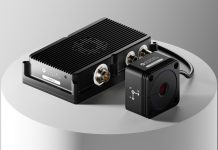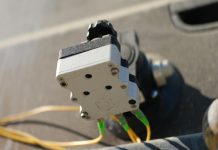
Advanced Navigation has announced the release of a new range of inertial navigation systems (INS) featuring integrated Electronic Protection (EP) capabilities, designed to support mission continuity in environments affected by GNSS jamming and spoofing.
The company, which develops assured positioning, navigation and timing (APNT) and autonomous systems, said the new EP product line is intended to address electromagnetic warfare (EW) threats across land, air, and maritime platforms.
According to Advanced Navigation, the range includes the Boreas D Series – comprising the Boreas D50, D70, and D90 fibre-optic gyroscope-based systems – and the Certus Evo, a micro-electromechanical (MEMS) GNSS/INS solution.
The company said the systems are designed to maintain accurate navigation and positioning in high-threat or degraded signal conditions.
Maximilian Doemling, chief product officer at Advanced Navigation, said the company developed the EP range to meet emerging defence requirements.
“Countering signal jamming and spoofing requires solutions that are several steps ahead – we must evolve our defence systems to align with battlefield realities,” Doemling said. “This means embedding Electronic Protection into the foundation of every system.”
He said the new product range integrates inertial navigation technology with real-time interference detection and mitigation features.
“Our new Electronic Protection range takes our proven inertial navigation technology and combines it with advanced capabilities to detect and neutralise interference in real time,” he said.
“The array of options allows integrators and primes to tailor the navigation solution to their platform’s mission profile, threat environment, and SWaP-C requirements.”
Advanced Navigation said the EP systems include features for detecting GNSS interference, cryptographic validation to identify spoofing, and adaptive filtering to maintain navigation integrity.
A built-in spectrum analyser provides real-time monitoring of the radio frequency spectrum, while dual-antenna, multi-band GNSS receivers are designed to enhance signal robustness in high-interference environments.
The company added that its proprietary sensor fusion algorithms adjust input data based on reliability and environmental conditions to maintain accuracy when GNSS signals are limited or unavailable.
According to Advanced Navigation, the EP range can be integrated into a variety of defence platforms, including combat vehicles, unmanned systems, ISR payloads, radar pointing systems, and maritime autonomous vehicles.
The rollout follows the company’s earlier announcement to establish Positioning, Navigation and Timing (PNT) Centres of Excellence in the United Kingdom, the United States, and Europe.