Researchers at the Australian Institute for Bioengineering and Nanotechnology (AIBN) have developed a new diagnostic device that could transform how brain cancer and other neurological conditions are monitored and treated.
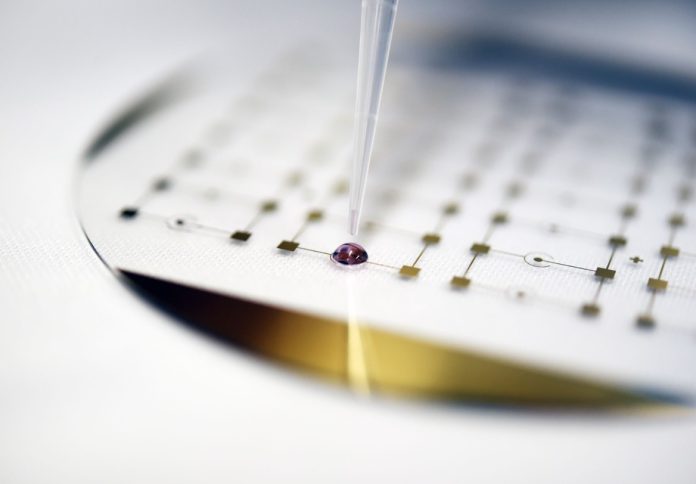
The device, called the Phenotype Analyzer Chip, can assess how glioblastoma – a common and aggressive form of brain cancer in Australia – responds to treatment using only a small blood sample.
The technology detects extracellular vesicles, tiny particles released from tumour tissue, which cross the blood-brain barrier and carry information about the disease.
“There has been very little success so far in clinical trials for new and experimental glioblastoma treatments,” said Dr Richard Lobb of AIBN.
“That’s partly because there is no way to tell if a therapy is working precisely as it should at that moment without drilling into someone’s head.”
Dr Zhen Zhang, who co-developed the chip, said the device provides a non-invasive method to monitor the disease.
“These particles cross the blood brain barrier laden with information on the disease, and with our hypersensitive device we can pick them up and interrogate them,” Dr Zhang said.
The device has been validated in more than 40 brain cancer patients, and AIBN is now working with translational partners to bring the technology into clinical trials.
ARC Laureate Professor Matt Trau, whose laboratory developed the chip, said the tool could provide early and precise information on treatment progress, rather than waiting for MRI imaging later in the disease.
The development involved collaboration with the Mark Hughes Foundation Centre for Brain Cancer Research at the University of Newcastle, using patient samples from the MHF Brain Cancer Biobank, and funding from the Mark Hughes Foundation.
Professor Mike Fay, Director of the Centre, said the technology could particularly benefit patients in regional and remote areas who often need to travel for advanced care.
“A blood test for brain cancer will be a game-changer for patients, particularly those living in regional and remote areas,” he said.
Beyond brain cancer, researchers say the Phenotype Analyzer Chip could support therapies for neurological conditions including Alzheimer’s, Parkinson’s, motor neurone disease, and depression.
Dr Lobb said the platform’s hypersensitivity could be adapted to monitor other disorders associated with neuroinflammation.
“Glioblastoma really is just the beginning for this technology,” Dr Lobb said.
The research has been published in Science Advances.