Australia’s national science agency, CSIRO, says a world-first trial in India has demonstrated how agricultural waste can partially replace coal in steelmaking, marking a step toward lower-emissions steel production.
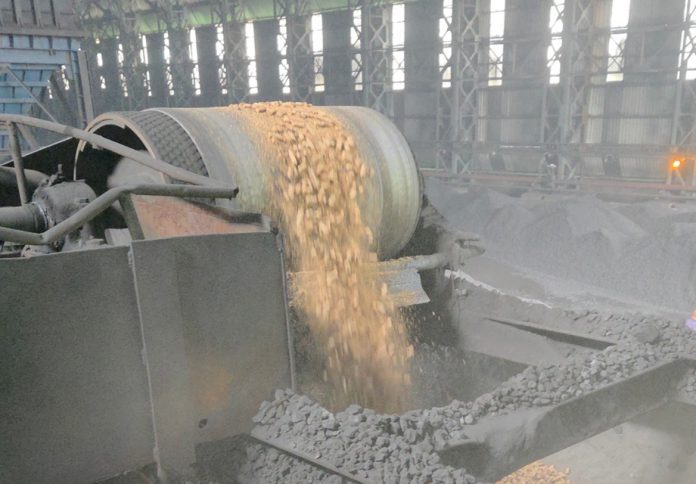
According to CSIRO, researchers working with the Indian Institute of Science validated the use of rice husk pellets to produce biomass-derived synthesis gas (syngas) for iron ore reduction at a commercial steelworks in India.
In a news release, the agency said the trial was conducted in partnership with RESCONS Solutions Pvt. Ltd. and Jindal Steel and Power Limited.
CSIRO said the project demonstrated sustained syngas production using locally sourced rice husk pellets blended at five and ten per cent into gasifiers at Jindal Steel’s operations in Odisha, without affecting performance.
The work forms part of the India–Australia Green Steel Research Partnership funded by the Australian Government.
Warren Flentje, senior experimental scientist at CSIRO, said the trial showed agricultural waste could be used at scale in steelmaking processes.
“This trial is a world-first demonstration of how agricultural waste can be harnessed to decarbonise steelmaking at scale,” Flentje said.
“By blending rice husk pellets into commercial gasifiers, we’ve shown that biomass can replace coal without compromising performance. This is a major step forward for sustainable steel production in India and globally.”
The research addresses emissions challenges in India’s steel industry, which CSIRO said is the fastest-growing globally and projected to reach 300 million tonnes of capacity by 2030 and 500 million tonnes by 2047.
Steel production in India currently emits an average of 2.55 tonnes of CO2 per tonne of steel, compared with a global average of around 1.8 tonnes.
CSIRO said the sector accounts for roughly 12 per cent of India’s total emissions, largely due to reliance on coal-based processes and widespread use of small-scale rotary kiln-based direct reduced iron (DRI) plants.
Keith Vining, research group leader for green metals production at CSIRO, said the collaboration highlights how biomass could help reduce emissions while supporting regional economies.
“India’s steel sector is both a major employer and a significant source of emissions,” Vining said. “Our partnership with the Indian Institute of Science and JSPL has demonstrated that biomass can be a viable alternative to coal, especially in regional areas where surplus agri-waste and coal DRI facilities co-exist.”
“If adopted across India, the approach could reduce steel sector emissions by up to 50 per cent, equivalent to about 357 million tonnes of CO2 per year,” CSIRO said.
The research also highlights India’s large supply of agricultural residues. CSIRO said surplus crop residue biomass in the country totals more than 228 million tonnes annually, much of which is currently burned in fields, contributing to poor air quality.
Professor Govind S. Gupta, managing director of RESCONS Solutions, said the project supports the development of environmentally sustainable industrial practices.
“Collaborating with CSIRO and IISc, we are proud to help pioneer the use of biomass in steelmaking, supporting India’s transition to greener industrial practices,” Gupta said.
Damodar Mittal, executive director at Jindal Steel, said integrating biomass and green energy sources could help accelerate the company’s decarbonisation efforts.
“By integrating green energy and biomass into our production processes, we are not only reducing our carbon footprint but also setting a new benchmark for the Indian steel industry,” Mittal said.
CSIRO said the team has also released an interactive map showing India’s steelmaking infrastructure alongside regional biomass availability to help identify potential supply opportunities.
The research partners plan to expand the work to smaller regional steelmaking facilities and test additional biomass sources, including integrated systems capable of producing both food and steel feedstocks.
A spokesperson from the Indian Institute of Science said innovations such as biomass gasification and hydrogen-based processes could significantly reduce emissions from conventional steel production.
“Our partnership with CSIRO is helping to bring carbon neutrality to steel production by 2050,” the spokesperson said.