The Australian Government says new investment in advanced battery research and local manufacturing capability is strengthening the performance and safety of energy systems that power Defence platforms and systems.
In a media release marking National Battery Day on 18 February, the government highlighted work led by the Defence Science and Technology Group (DSTG) over the past decade to explore, test and develop safer, higher-performance and sovereign battery technologies for Australia’s Defence capabilities, with a focus on building domestic manufacturing capacity.
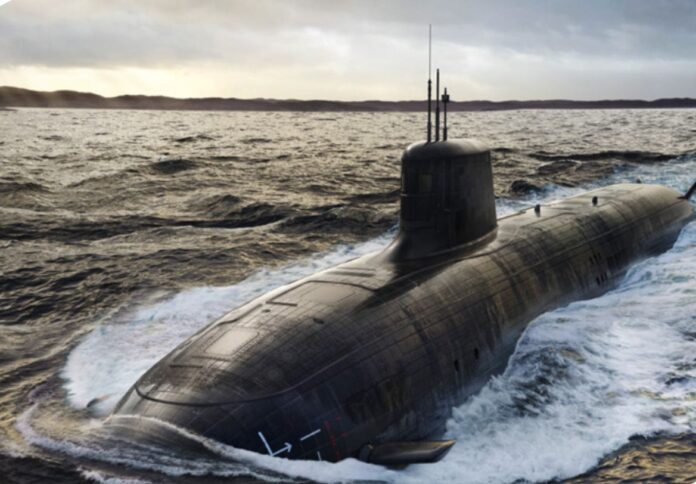
As Defence moves toward more advanced and self-reliant capabilities, the government said energy systems have become increasingly critical, particularly for conventional submarines where the main storage battery underpins underwater operations, stealth and endurance.
Platforms relying solely on traditional lead-acid batteries are no longer sufficient as technologies evolve and threats emerge.
Anthony Szabo, Assistant Chief Platforms at DSTG, said the program has ranged from fundamental scientific investigation to full-scale testing of next-generation battery cells and modules, alongside the establishment of national facilities and partnerships with Australian industry to accelerate local manufacturing capability.
“This work ranges from fundamental scientific investigation to full-scale testing of next-generation battery cells and modules. It also includes establishing unique national facilities and partnering with Australian industry to accelerate local manufacturing capability,” Dr Szabo said.
The government noted that while alternative battery technologies offer performance advantages, they also present challenges related to safety, integration and sustaining benefits over a platform’s life.
To address this, DSTG developed specialised skills, modelling tools and facilities, including a dedicated battery performance and degradation laboratory to conduct accelerated and real-time charge-discharge experiments.
Dr Szabo said safety remains central to the evaluation of new systems. “Safety is a critical factor in selecting any new battery technology,” he said, adding that DSTG established a purpose-built battery safety research facility to test how cells behave when pushed beyond electrical, mechanical or environmental limits.
Experiments are conducted in a chamber equipped with high-speed cameras, infrared imaging and sensors to measure heat and gas release in real time.
According to the release, the studies have provided insight into how different technologies respond to failure and what mitigation strategies are required. The facility continues to support both underwater and land-based Defence applications.
A key objective of the program has been to improve platform performance, enhance safety and strengthen Australia’s sovereign capability to maintain, upgrade and manufacture its own batteries.
DSTG examined options to retrofit new battery technologies into existing submarines and to influence the design of future Defence platforms.
For retrofit pathways, DSTG collaborated with Australian industry on nickel-zinc technology, developing and testing full-scale submarine modules. It also assessed a mature lithium-ion system as a lower-risk integration option for the Attack-class submarine program.
Producing large-format lithium-ion cells for Defence applications requires advanced skills and specialised processes. DSTG worked with three potential Australian manufacturers to evaluate locally produced large-format cells for performance and safety, and developed new lithium-ion chemistries incorporating high-voltage cathodes and safer electrolytes to improve energy density and safety.
The government said this work is progressing into industrial production, with one Australian manufacturer scaling up DSTG’s chemistry to produce high-energy-density lithium-ion cells for underwater, air and land-based applications.
“Together, these efforts have laid the foundation for safe, high-energy, Australian-made battery technologies capable of powering the next generation of Defence platforms while strengthening the nation’s sovereign industrial base. DSTG’s long-term investment has created a uniquely Australian capability that positions Defence for the future,” Dr Szabo said.
The government said the transition from traditional lead-acid systems to next-generation technologies is complex and requires careful risk management.