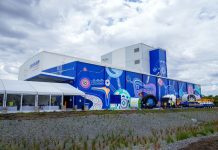
HDR has delivered a manufacturing-focused facility at Western Sydney University’s Bankstown City Campus, with the firm stating the project is designed to integrate advanced technologies into education, research, and industry engagement.
In a media release, HDR said the Factory of the Future brings together advanced manufacturing, robotics, and digital processes in a single environment, allowing students and researchers to engage directly with emerging technologies through hands-on learning and collaboration.
“The Factory of the Future is an immersive platform for invention, creativity, and collaboration,” said Alex Wessling. “We set out to design a space where innovation is visible and approachable.”
According to HDR, the facility spans two interconnected levels, with the lower-level Discovery Space focused on introducing Industry 5.0 principles, and the upper-level Immersive Training Hub supporting advanced prototyping, virtual and augmented reality, and research-led activities.
Wessling said the design approach aimed to make manufacturing concepts more accessible. “Central to the design is a pedagogical ambition to reveal rather than conceal emerging technologies,” he said.
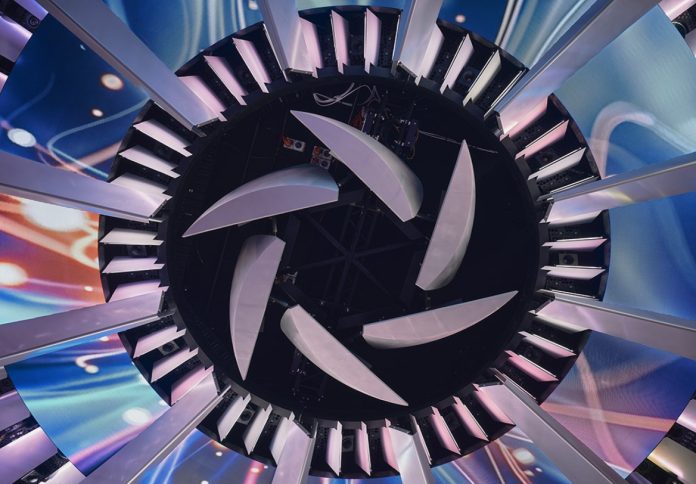
HDR said the project responded to site constraints through a circular layout, connecting the two levels and guiding users through the space. At its centre is the “Innovation Engine,” a kinetic installation fabricated locally, which the firm described as both a visual feature and a teaching tool that translates complex manufacturing processes into a more engaging format.
“It functions not only as a sculptural statement but as a teaching device,” Wessling said, adding that it reflects the region’s manufacturing history and capability.
The company said the project was delivered in collaboration with Built, STAKK Studio, and local fabricators, with more than 80 per cent of components manufactured in Sydney.
HDR also noted that the facility has been used for outreach programs involving local secondary schools, extending its reach beyond university students and supporting STEM engagement in the surrounding community.
“The Factory of the Future represents a new kind of technology-led campus environment,” said Graeme Spencer, adding that it demonstrates how design can support connections between education, research, and enterprise.
From the university’s perspective, the facility is intended to support future manufacturing capability and innovation.
“It will accelerate innovation, strengthen industry capability, and create new pathways for students to shape the future of advanced manufacturing,” said Don Wright.