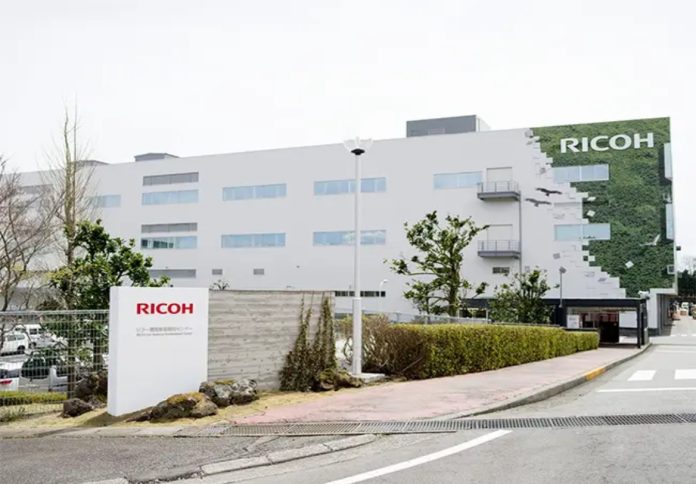
Global imaging and electronics manufacturer Ricoh has secured a place on the 2026 Global 100 Most Sustainable Corporations. This marks the 14th time the company has achieved this recognition.
According to its announcement last week, Ricoh ranked 19th among 1,043 companies in the information technology sector and placed 3rd within the Computers and Peripherals Manufacturing Peer Group.
Published annually by Corporate Knights, a sustainable-economy media and research organisation, the Global 100 ranking evaluates 8,231 companies with annual revenues exceeding US$1 billion. The assessment utilizes three equally weighted performance indicators: sustainable revenue, sustainable investment and sustainable revenue growth, with additional adjustments for penalties and executive compensation linked to sustainability performance.
“The Ricoh Group is advancing its sustainability initiatives by aligning ESG with business growth,” said Mikako Suzuki, corporate officer in charge of ESG and risk management at Ricoh Company, Ltd.
“We are honoured to be recognised once again as a Global 100 company. This recognition reflects high evaluations of our continued efforts to expand sales of sustainable products and services, as well as investments in sustainability, including upgrades to energy-efficient facilities.”
The results were announced during the World Economic Forum Annual Meeting in Davos, Switzerland.
Ricoh’s sustainability framework is built around what it calls a “Three Ps Balance” – Prosperity (economic), People (society) and Planet (environment). The company has identified seven material issues across two focus areas: “Resolving social issues through business” and “Robust management infrastructure,” with 16 specific ESG targets linked to these issues.
In its report, Corporate Knights said it recently revised its methodology to reflect the accelerating global economic transition, recognising that “sustainability isn’t just good marketing – it’s good for business, too.”
The updated approach introduces “sustainable revenue momentum” to measure how quickly companies are growing their sustainable revenues, accounting for one-third of a company’s score.
The remaining two-thirds are determined by overall sustainable revenues and sustainable investments. This shift acknowledges the “newfound urgency” in aligning economic systems with the planet’s carrying capacity.