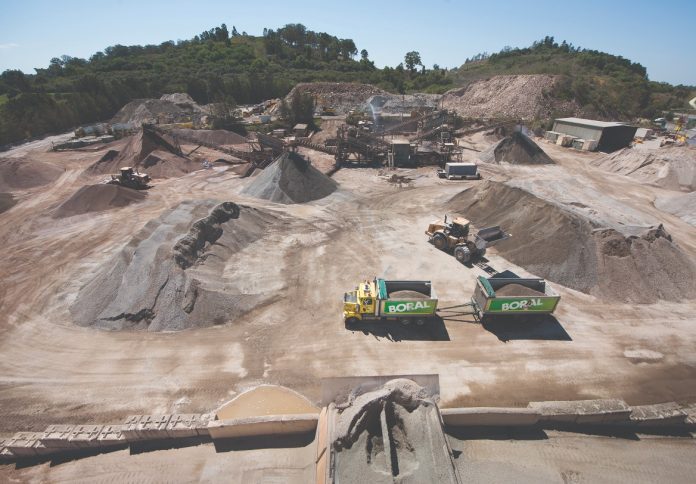
Australia’s manufacturing sector is emerging as a central driver in Boral’s expanding circular materials program, with the company reporting that more than 2.5 million tonnes of construction and demolition waste are now diverted from landfill each year through its national recycling operations.
In an exclusive interview with Australian Manufacturing, Boral General Manager of Recycling Chris Morgan said the company has expanded its manufacturing and processing capabilities in response to growing demand for recycled construction materials.
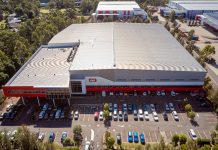
“We’ve grown our operational footprint and circular materials solution,” Morgan said, noting that Boral now operates 14 recycling facilities around the country. “We’re set up to reprocess materials from demolition and excavation sites that would otherwise be destined for landfill and repurpose them back into the construction sector as new sustainable products.”
Morgan said Boral reprocesses a wide range of recovered materials — including old road surfaces, crushed concrete, glass, bricks and soils — into manufacturing inputs for road base, asphalt mixes, pipe bedding, high-grade compaction sands and other construction-grade materials.
“For every tonne of material we can reprocess into aggregate, that’s one tonne less of virgin natural material we need to extract from a quarry,” he said.
Carbon recapture trial
Innovation in manufacturing is playing a key role in Boral’s low-carbon materials development, particularly through a recent industrial-scale trial involving recarbonated recycled concrete aggregates.
Dr Ali Nezhad, Boral’s Head of Sustainability and Innovation, said the trial marks an Australian first in accelerating concrete’s natural ability to absorb CO2. “We conducted the first industrial scale trial here in Australia of accelerating this process through direct exposure of recycled concrete to carbon dioxide from our cement plant at Berrima,” Nezhad said.
According to Boral, the trial used recycled concrete from Boral’s Widemere facility and exposed it to CO2 diverted from the Berrima cement kiln via a recarbonation-based carbon capture pilot plant. The treated aggregates replaced 50 per cent of natural coarse aggregates in a low-carbon Envisia concrete mix during a field trial at Maldon.
Circular manufacturing turns industrial tyres into long-life road products
Boral said it is also manufacturing new circular road products using end-of-life Off the Road (OTR) tyres from heavy industrial vehicles.
“Our high-binder crumbed rubber asphalt surfacing was an Australian first,” Nezhad said. “Approximately two-thirds of an OTR tyre is recovered for our crumbed rubber mix, equating to about 400 kilograms per tyre. The crumbed rubber asphalt provides increased road performance and longevity, with a significant reduction in the need for maintenance.”
Quality control across national recycling operations
Managing quality and consistency across 14 recycling sites is a key manufacturing challenge, according to Boral. Morgan said Boral’s Circular Materials Solution enables the company to work closely with customers throughout the project lifecycle.
“Planning during the design phase ensures materials are collected and separated during demolition or excavation and diverted from landfill,” Morgan said. “This makes it more possible to process and reintroduce these materials as new recycled or reclaimed construction materials.”
Innovation pipeline
Boral said it continues to collaborate on emerging waste-recovery initiatives, including crushed solar panel glass used as sand in Victoria’s North East Link project.
“Boral is always engaged in innovation, research and development activity,” Nezhad said. “Some initiatives are conducted in-house… while others involve collaboration with partners who have an appetite to explore alternate supplementary cementitious materials.”
Commercial balance
Both Morgan and Nezhad emphasised that manufacturing innovation must align with customer and market needs.
“At the end of the day, successful commercialisation of a new product comes down to knowing there is a market for it,” Nezhad said.
Morgan added: “We work closely with our customers, listening to their needs so that we can design and develop a solution with the customer at the centre.”
Emerging technologies will accelerate circular manufacturing
Boral said it expects recycling and circular manufacturing solutions to play a growing role in Australia’s construction supply chains.
Nezhad said Boral has already diverted “almost 99% of our operational waste from landfill” through internal circular practices, including the use of waste materials as alternative fuels in cement production. He added that Boral’s Kiln Feed Optimisation project is replacing almost 9% of natural raw materials with recovered industry by-products such as fibre board waste, steel slag and blast furnace slag.
“These materials not only enable circular outcomes but help us deliver low-carbon concrete products essential to reducing the embodied carbon of Australia’s building and infrastructure,” Nezhad said.