Scientists at Australia’s national science agency, CSIRO, have outlined a theoretical approach to powering quantum computers using quantum batteries – a development CSIRO says could make future machines faster, more energy-efficient, and easier to scale.
In a news release, the agency said quantum computers rely on the principles of quantum physics to tackle complex problems with applications across computing, medicine, energy, finance, and communications.
However, according to CSIRO, maintaining their delicate quantum states typically requires energy-intensive cryogenic cooling systems and extensive electronic infrastructure, which remain major barriers to scaling up these technologies.
In a study published in Physical Review X, CSIRO researchers, alongside teams from the University of Queensland and the Okinawa Institute of Science and Technology (OIST), have theoretically shown how integrating tiny quantum batteries could power a quantum computer, potentially increasing its number of quantum bits, or qubits, by up to four times.
Dr James Quach, co-author of the study and CSIRO’s quantum batteries research lead, said the technology could significantly reduce the energy demands of quantum computers.
“Quantum batteries are small and mighty. Our findings bring us one step closer to solving the energy, cooling, and infrastructure challenges restricting quantum computers,” Dr Quach said in a statement from CSIRO.
Dr Quach explained that the batteries act like internal fuel tanks for the computer. “Instead of constantly refilling it from the electricity grid, the battery recharges while the computer operates. This research forms a key step in our exploration of quantum energy — an emerging field that could fundamentally reshape the way we create efficient, sustainable energy systems,” he said, as reported by CSIRO.
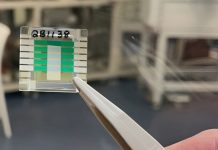
According to CSIRO, quantum batteries store energy using light, allowing them to recharge simply by exposure. When linked to a quantum computer’s processing units via quantum entanglement, the batteries could continually recharge through the machine’s own components.
CSIRO modelling indicates the approach could generate less heat, require fewer wiring components, and accommodate more qubits within the same physical space – all key factors for building practical and scalable quantum computers.
Dr Quach also noted potential speed improvements through quantum superextensivity, a phenomenon where adding more qubits increases processing speed.
“The paper reports the theoretical modelling of how quantum batteries could power existing quantum computers. The team’s next step is to develop a real-world demonstration of this approach,” Dr Quach said.
He added that while quantum batteries remain an emerging technology requiring further research, the findings “create exciting possibilities for the future of quantum computing.”