Researchers at UNSW Sydney have developed the world’s first motor powered by a droplet of liquid metal, a breakthrough the university says could have significant implications for manufacturing, soft robotics, and flexible machines.
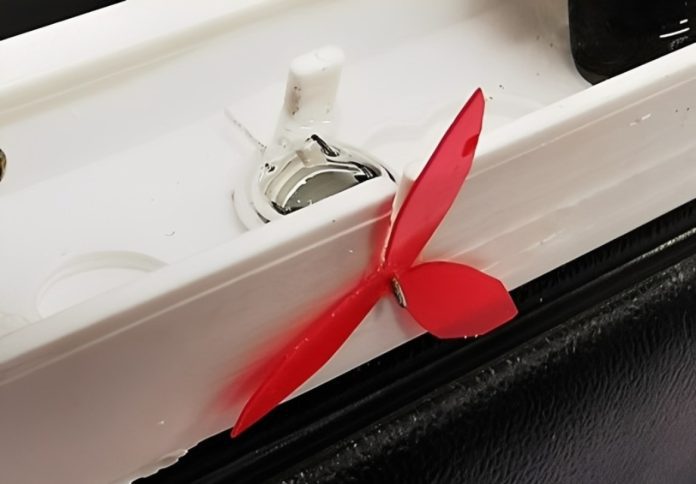
According to UNSW Sydney, the liquid metal droplet rotary paddle motor operates without traditional rigid components such as coils or magnets. Rotation is produced by swirling flows inside a droplet of liquid metal immersed in a salt solution and exposed to an electric field. A small copper paddle within the droplet is carried along by these flows, generating motion.
“This is a completely new way to create motion,” said Dr Priyank Kumar of UNSW Sydney, who supervised the project and is the corresponding author of a paper published in npj Flexible Electronics.
“We’re harnessing the flow of liquid metal itself to produce rotation, without any traditional moving parts. It’s simple, compact, and inherently flexible. Reaching speeds of 320 revolutions per minute, our motor sets a new benchmark for liquid metal actuators.”
UNSW Sydney highlighted that motors are essential components in everyday devices, from smartphones and laptops to washing machines and drones, converting energy into torque to drive motion.
The university said a new approach to motor design could reshape manufacturing processes and applications across consumer electronics, medical devices, and robotics.
The university noted that the motor’s flexibility makes it especially useful for soft robotics, where machines must bend, stretch, or move through confined spaces.
“Imagine a tiny robot that can move through narrow, irregular spaces inside the human body, powered by motors that are soft and flexible rather than hard and fragile,” said Professor Kourosh Kalantar-Zadeh of the University of Sydney, a collaborator on the project. “That’s the kind of future this technology points to.”
PhD student Richard Fuchs, who developed the motor, told UNSW Sydney: “The beauty of this design is its simplicity; it’s like a miniature waterwheel. Similar to how flowing water pushes the blades of the wheel, the swirling liquid metal pushes the copper paddles.”
The university said that beyond robotics, liquid metal motors could have applications in flexible electronics, microfluidic devices, and biomedical implants, where compact, self-contained motion is required in confined or delicate environments.
UNSW Sydney emphasised that the motor’s adaptability could enable the creation of machines that were previously impossible.