A breakthrough innovation developed at UNSW Sydney could transform global solar cell manufacturing, with researchers reporting that a new contactless inspection system has the potential to reduce waste, double production speed, and save the photovoltaic industry an estimated USD 1.4 billion annually.
According to UNSW Sydney, the ACDC (Artificial Intelligence, Characterisation, Defects and Contacts) Research Group is working with university spinout company BT Imaging to accelerate the commercialisation of the defect detection technology.
The initiative is supported by a $400,000 grant from the Trailblazer Recycling & Clean Energy (TRaCE) Lab to Market Fund and a $1 million contribution from BT Imaging, the university said in a news release.
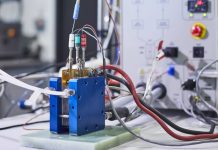
UNSW stated that the new inspection system combines advanced imaging and machine learning to generate detailed maps of electrical parameters and defects in solar cells.
The technology is designed to provide a faster, contactless and more accurate testing method, which could set a new benchmark for quality control in solar cell manufacturing.
Project lead Professor Ziv Hameiri from UNSW said the system addresses key limitations in existing testing methods used by solar cell manufacturers.
“While solar cells have advanced dramatically in recent years, with more sophisticated structures and outstanding performance, the main quality inspection tool has remained largely unchanged for over a decade,” Prof Hameiri said.
He added that current ‘current-voltage’ testing methods require physical contact with fragile solar cells, increasing the risk of damage and overlooking early-stage defects.
“Traditional testing methods can only be used in the late stages of cell production, which means early defects are missed and production is significantly slowed,” he said.
UNSW researchers explained that the new system works by shining light onto a solar cell and analysing the faint luminescence it emits. They reported that this luminescence reveals key electrical properties such as voltage, resistance and efficiency. Using artificial intelligence, the data is then converted into detailed maps of defects, performance, and projected lifespan.
“Through our collaboration with BT Imaging, we aim to reshape the industry by introducing contactless measurements that overcome the limitations of standard current-voltage testers, while offering lower cost, higher throughput and, importantly, new insights that will make solar cells even more efficient and reliable,” Prof Hameiri said.
BT Imaging Managing Director Dr Shubham Duttagupta said the partnership builds on UNSW’s long-standing leadership in solar innovation.
“By combining UNSW’s cutting-edge innovation with our commercialisation expertise, we’re turning laboratory breakthroughs into practical, factory-ready products for both silicon and next-generation solar cells,” Dr Duttagupta said.
“We are creating inspection systems for manufacturers all around the world that are faster, more reliable, more accurate and future-proofed than ever before.”