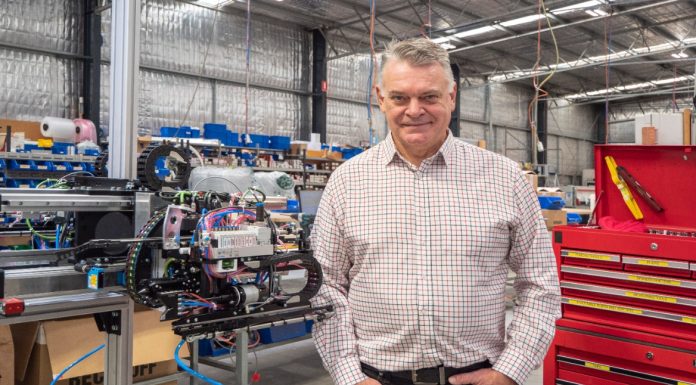
Article by Andrew Mamonitis, Vice President – APAC, Manufacturing Division, ECI Software Solutions
Heightened visibility of what’s coming in and going out of your plant will boost customer service and profitability.
Do you have excess inventory gathering dust in your warehouse as you wait on customer orders that are slow in coming? Or perhaps you’re plagued by the opposite problem – an absence of the materials you need to get orders out the door on time?
For many small and medium-sized Australian manufacturers, it’s one or the other.
Chronic over-purchasing is common among those that were burnt during the Covid crisis, when supply chain disruption created scheduling and production havoc for businesses that didn’t have adequate contingency plans, or a stockpile to see them through.
Others continue to wing it with a just-in-time approach that can see them come unstuck when a large order comes in unexpectedly, or a supplier is unable to facilitate a rush order when they make that urgent call – again.
If this is how things roll in your manufacturing business, it’s fair to say you’re flirting with disaster. Poor inventory control can crimp cash flow, put a serious dent in your profitability and damage your reputation as a reliable supplier. In challenging economic times, such as those we’re currently experiencing, it can mean the difference between sinking and swimming.
Making mistakes in manual mode
Sub-optimal inventory control is more likely to be a feature in businesses that are operating in manual or semi-manual mode – those that don’t have a consistent, data driven ordering process in place.
Typically, they don’t set minimum and maximum stock levels or maintain up-to-date visibility over what’s in their warehouse and on order.
That means they’re unaware of exactly what inventory they have on hand, let alone how much it’s costing them to keep it there.
Managing this vital aspect of operations is very often the responsibility of a single individual. Their estimate of what’s required to fulfil upcoming customer orders determines the size and frequency of orders for materials. But, unless they’re able to access accurate inventory, ordering and production data, there’s a constant risk of them getting it wrong, by a little or a lot.
At the same time, should that go-to person go on leave, or leave the organisation, their colleagues may struggle to get a handle on what’s needed to keep the lines ticking over and goods going out the door.
Tools to make the task easy
There is a smarter way and that’s where cloud-based enterprise resource planning (ERP) software comes into its own.
Abandoning manual and semi-manual processes and implementing a solution developed with the unique requirements of the manufacturing industry in mind can help you maintain a detailed, accurate picture of your stock at hand.
Ideally, you’ll choose a platform that can collate all your inventory, ordering and production data into a ‘single source of truth’. This will provide you with complete visibility into everything that’s in your warehouse and on order. You’ll also have a clear picture of your upcoming production schedule and the regular customer orders coming up.
Having access to that up-to-date repository of critical information will eliminate guesswork that leads to under and over ordering. Instead, you’ll be able to track your incomings and outgoings at a granular level and use automated alerts to notify key personnel when inventory levels start to run low, or if a shipment of materials has failed to arrive.
Should your production schedule be impacted by such a delay, you’ll be able to let your customers know well in advance, so they can enact their own contingency plans.
Setting your manufacturing business up for a more profitable tomorrow
Maintaining optimum stock levels is part and parcel of running a reliable and profitable manufacturing business, one that customers can rely on to deliver the goods, on time, every time. Invest in an ERP platform that allows you to keep tight control over the materials you use in the production process and you’ll find doing so an easier proposition.
If operating more efficiently and profitably is a priority for you this year, it’s enabling technology that will pay for itself many times over.
The content of this article is based on information supplied by the author. This information is general in nature and has been prepared without taking your personal/ professional/business objectives, circumstances and needs into account. You should consider the appropriateness of the information to your own circumstances and, if necessary, seek appropriate professional advice. Consider the terms and conditions for the product before making any decision.