
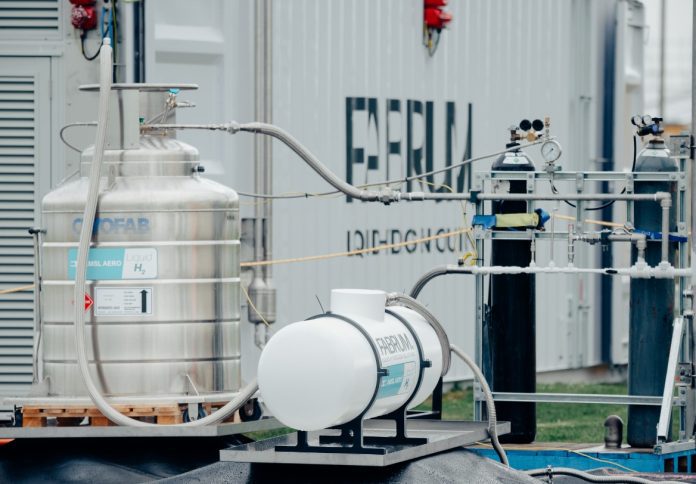
AMSL Aero, in collaboration with New Zealand-based Fabrum and Brisbane-based Stralis Aircraft, has announced an advancement in hydrogen-electric aircraft manufacturing following the successful refuelling of composite liquid-hydrogen aviation tanks.
The milestone was achieved at Fabrum’s liquid-hydrogen test facility at Christchurch Airport’s renewable energy precinct, where composite aviation tanks were filled with liquid hydrogen produced and stored on-site at an international airport.
In a statement, the companies said the demonstration represents an important step toward realising Australasia’s first hydrogen-electric flights.
Sydney-based company AMSL Aero is developing Vertiia, a hydrogen-electric vertical take-off and landing (eVTOL) aircraft designed for long-range, low-emission transport.
“Vertiia is the world’s first eVTOL designed from inception to be powered by hydrogen for long-range, cargo and passenger operations,” said Dr Adriano Di Pietro, CEO of AMSL Aero.
“[W]ith Fabrum, we have demonstrated the key steps in that process – from producing liquid hydrogen to filling the tanks that will be installed on our aircraft before our first liquid hydrogen flights next year. This is a major milestone for hydrogen-electric aviation.”
Fabrum, which designed and manufactured the composite liquid-hydrogen tanks, said the test confirmed the feasibility of producing, storing, and dispensing liquid hydrogen for aviation at an operational airport.
“By bringing all the elements together for the first time at an international airport, we’re proving that hydrogen-electric flight will soon be a reality in Australasia,” said Fabrum Managing Director Christopher Boyle.
Stralis Aircraft, which is developing hydrogen-electric propulsion systems for fixed-wing aircraft, welcomed the successful demonstration.
CEO Bob Criner said, “This is a vital step toward our first liquid-hydrogen test flights. Seeing these refuelling systems proven in testing gives us confidence as we progress toward commercial applications.”
Christchurch Airport CEO Justin Watson said the collaboration highlights the growing role of hydrogen in aviation’s energy transition.
“It’s fantastic to welcome aviation industry leaders paving the way for a transition to a low-emissions future here at the airport,” Watson said.
The media release noted that these hydrogen advancements are part of ongoing industry collaboration through the Hydrogen Flight Alliance, which includes Fabrum, AMSL Aero, and Stralis Aircraft.
AMSL Aero recently received funding from the Australian Government’s Cooperative Research Centres Projects (CRC-P) Program for its “Liquid Hydrogen Powered Aircraft for Regional and Remote Australia” initiative, designed to accelerate hydrogen-powered flight through local manufacturing and innovation partnerships.