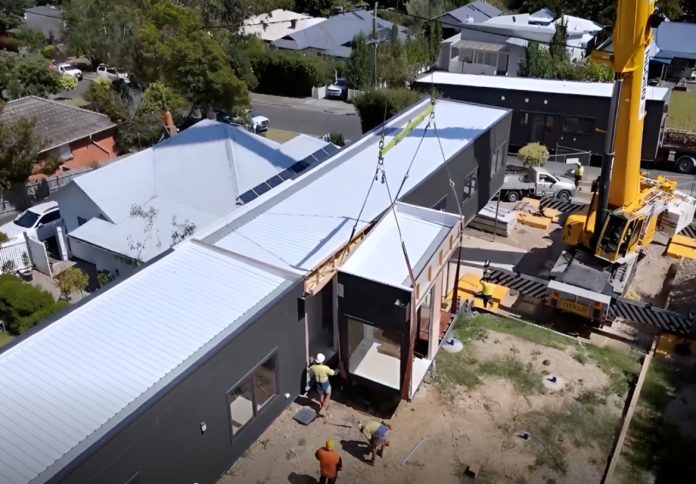
Australia’s manufacturing sector could play a greater role in accelerating housing construction as prefabricated homes shift more building work from construction sites to factory floors, according to CommBank.
In a news release, CommBank said prefabricated homes can be manufactured in as little as eight to 12 weeks once a contract is signed, although planning, design, approvals and site preparation can add to the overall project timeframe.
The bank has sponsored the development of an industry-wide standard contract launched by PrefabAUS, designed to better align payment stages with the manufacturing and delivery process for prefabricated homes.
The contract is available to builders, manufacturers, customers and lenders regardless of which lender provides the finance.
CommBank Home Buying General Manager Rebecca Markwell said modern construction methods could support faster housing delivery.
“We’ve already introduced changes to our lending policy to better support prefabricated housing, including enabling progress payments during the offsite construction phase,” Markwell said.
According to CommBank, the financing changes address a mismatch between traditional construction finance and prefabricated building, where a significant portion of the home is manufactured away from the customer’s site before being transported and assembled.
The bank said the standardised contract defines payment stages around key manufacturing milestones, providing greater clarity over when payments are due and what work has been completed.
“Working with the industry to support innovation in construction and remove barriers for adoption of modern methods of construction, including sponsoring the development of a standardised contract, is all part of how CommBank is supporting the delivery of more housing supply to the market,” Markwell said.
PrefabAUS Executive Chairman Damien Crough said existing contracts had not been designed around factory-based construction.
“For too long, prefabricated construction has been constrained by contracts designed for traditional, site-based delivery,” Crough said.
The approach is also being used by prefab builder Anchor Homes, where Managing Director Lester Raikes said factory construction typically takes eight to 12 weeks after contracting, with some site preparation occurring concurrently.
“With our build process, we’ve had customers move into their new home within months of signing their contract,” Raikes said.
CommBank said prefabricated construction does not necessarily mean lower house prices, with costs varying according to the design and project. However, the bank noted that offsite manufacturing can reduce the amount of construction required at the final site and may provide other time-related benefits.
PrefabAUS and CommBank said the standardised approach is intended to support greater clarity around the financing and delivery of prefabricated housing as Australia works towards its target of 1.2 million new homes by 1 July 2029.