Australia’s national science agency CSIRO, in collaboration with Meat & Livestock Australia (MLA) and Google Australia, has launched a global competition aimed at advancing the use of artificial intelligence (AI) in agriculture and pasture management – an area increasingly linked with digital innovation in manufacturing and production systems.
The challenge, hosted on Google’s Kaggle platform, offers a total prize pool of USD 75,000 to encourage global participation in developing AI models capable of improving the accuracy and efficiency of estimating pasture biomass – the amount of grass and other edible plants available for livestock, the agency said in a news release.
According to CSIRO, accurate biomass estimation plays a key role in grazing management, helping producers balance livestock feeding with pasture regrowth, which in turn supports productivity, sustainability, and biodiversity across Australia’s vast grazing systems.
“Accurately measuring pasture biomass enables producers to balance livestock needs with pasture regrowth, supporting long-term productivity and environmental health,” CSIRO said.
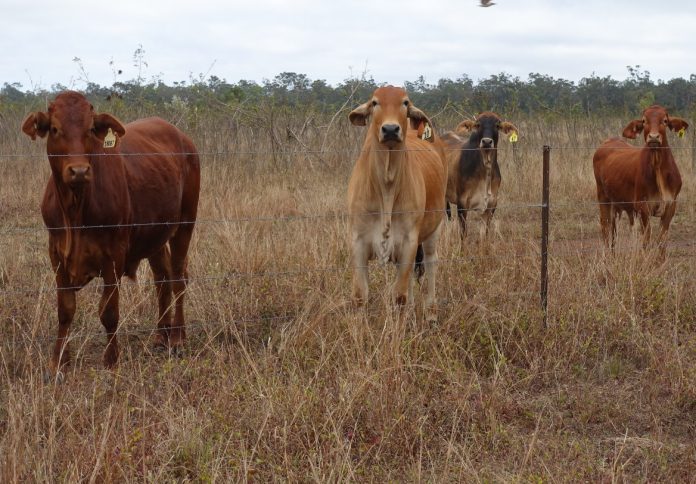
CSIRO Senior Principal Research Scientist Dr Dadong Wang said the dataset underpinning the challenge reflects the diversity of Australian grazing systems, capturing different seasons, regions, and pasture species compositions.
“Each image is paired with detailed measurements, such as how tall the plants are and how green and healthy they look, based on how the pasture reflects light,” Dr Wang said.
“By combining images with field data, we’ve collated a dataset that allows AI models to learn in more than one way. It can estimate pasture biomass directly from the images or combine the images with plant health and vigour information to produce even more accurate results.”
According to CSIRO, competitors will use this dataset to predict pasture availability and species composition with higher precision than existing approaches, potentially reducing the need for manual sampling.
The agency noted that these AI-driven solutions could deliver faster, more reliable insights to support data-informed grazing and land management.
MLA Group Manager – Science and Innovation Michael Lee said the collaboration highlights the potential for new digital technologies to benefit livestock producers.
“If successful, an AI-powered, machine vision approach will reduce the time and cost associated with manual sampling,” Lee said.
“The rapid and accurate differentiation of biomass components also feeds into improving a producer’s ability to both determine current pasture quality, as well as predicting quantity and quality into the future.”
Google Australia’s Partnerships Principal Scott Riddle said the project underscores how partnerships between science and industry can drive innovation.
“As part of the Digital Future Initiative, we’re delighted to partner with CSIRO and MLA to support the future of Australian farming – with a bit of help from AI,” Riddle said.
“By connecting CSIRO’s deep scientific expertise and MLA’s industry knowledge with the 26 million innovators on Kaggle, we’re putting a global AI community to work to try and find new approaches to a longstanding problem.”
CSIRO said insights from the competition could guide the creation of next-generation digital tools that underpin sustainable and technology-enabled grazing systems in Australia and globally.
The competition is supported by FrontierSI, formerly the Cooperative Research Centre for Spatial Information, and entries will remain open until 28 January 2026.