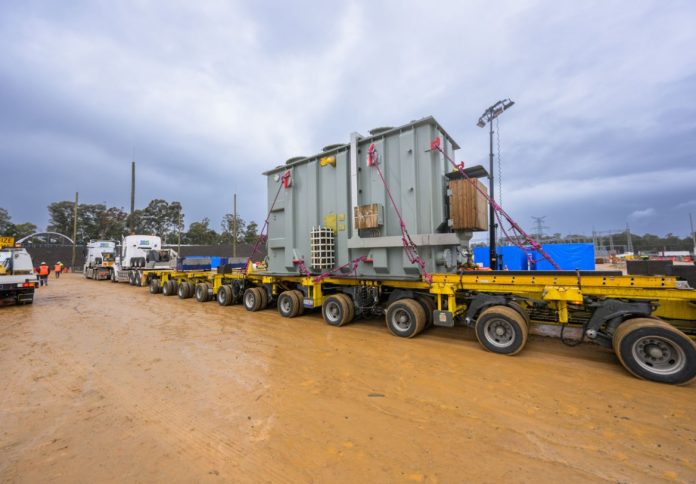
Hitachi Energy has delivered the sixth and final 500kV shunt reactor for Transgrid’s HumeLink project, marking a milestone in the development of one of New South Wales’ major transmission infrastructure projects.
The six reactors, manufactured at Hitachi Energy’s transformer and shunt reactor facility in Chongqing, China, will be installed at Transgrid’s Maragle, Bannaby and Gugaa substations as part of the 365-kilometre HumeLink transmission connection.
Each reactor weighs more than 120 tonnes and is among the first three-phase 500kV reactors to be used in Australia.
In a news release, Hitachi Energy said the equipment is designed to provide reactive power compensation within the project’s 500kV double-circuit transmission loop.
A shunt reactor absorbs reactive power to help manage voltage levels and support the operation of long-distance electricity transmission lines.
Hitachi Energy Australia Managing Director Bernard Norton described the equipment as “critical pieces of electrical infrastructure” and said the reactors would help manage voltage across the transmission system.
“Each one is like a giant electrical sponge, working to soak up excess reactive power, bringing the voltage back to a safe, stable level in these sorts of long transmission lines,” Norton said.
HumeLink is expected to support the connection of new generation and storage capacity with electricity users across NSW. The project is also expected to generate more than 1,600 jobs, according to Hitachi Energy.
Hitachi Energy’s service team is undertaking the on-site assembly, installation and testing of the six reactors, alongside the delivery and installation of 28 high-voltage circuit breakers. The company said its service specialists are working with locally based Australian subcontractors on the work.
Norton said the project highlighted the role of local technical capabilities in supporting major transmission projects.
“This project demonstrates the value of maintaining strong local field service capabilities that can support major transmission infrastructure projects across Australia,” he said.
Following manufacture in Chongqing, the reactors were transported to Port Kembla before being moved approximately 480 kilometres by heavy-haul convoy to their designated substation sites.
Hitachi Energy said final commissioning of the shunt reactors is expected to be completed by the end of 2026.