
Manufacturing and other industrial projects across Australia and the wider region are increasingly turning to local automation capabilities to manage project complexity, supply chain challenges and delivery timelines, according to Rockwell Automation.
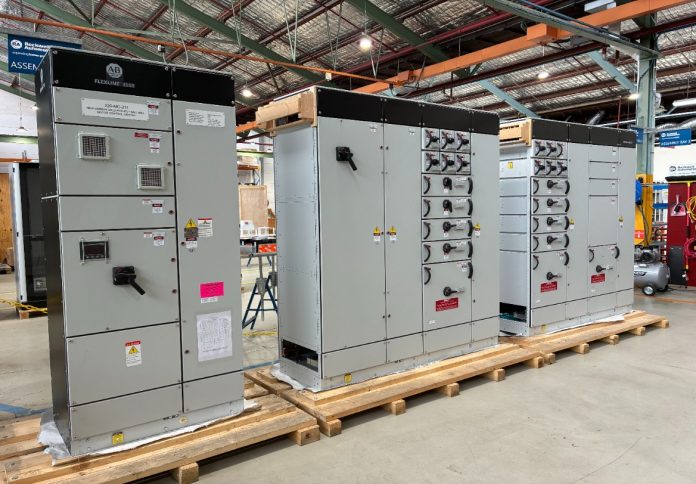
In a news release, the automation company said its Sydney-based Integrated Manufacturing Facility supports customers across Australia, New Zealand and Southeast Asia through local assembly, procurement, testing, logistics and project customisation.
Rockwell Automation Lifecycle Services Director Michael Jones said having these capabilities in Australia can provide benefits when projects face supply chain constraints and tight deadlines.
“In times of supply chain challenges, and demanding project deadlines, having this capability in Australia offers distinct benefits to customers,” Jones said.
The facility can also accommodate project-specific requirements, including customised colours, wire numbers and labels, as well as modifications to standard automation solutions.
“Customers may want their automation products to be a different colour to match other site colours, they may need different wire numbers or labels, or they might need to make the entire solution totally different to the standard,” Jones said.
“In each case, our Sydney facility is equipped to handle the task all under one roof.”
Rockwell Automation said local engineering and testing capabilities also contribute to what it describes as sovereign capability, particularly for industries that rely on critical automation systems.
“Sovereign capability extends beyond where products are manufactured. It is also about ensuring local access to the engineering knowledge, technical skills, and operational support required to keep critical industries running,” Jones said.
The company said automation projects can require modifications to meet operational or compliance requirements, including Australian Standard AS3000. Its Sydney facility is intended to allow customers to coordinate procurement, assembly, testing and logistics through a single provider.
“Every project is different, so flexibility is key,” Jones said. “Our approach is that nothing is too hard – our experts will find the solution, and deliver it faster with local support.”
While the facility operates within Rockwell Automation’s Integrated Supply Chain organisation, the company said its role extends into engineering and project delivery. The team works with customers, contractors and system integrators to specify, assemble, test and validate solutions before deployment.
“Industrial projects will always involve complexity, but complexity doesn’t have to create uncertainty,” Jones said. “By combining global automation technology with local engineering, assembly and testing capabilities, we help customers reduce risk, improve project outcomes, and build confidence that systems are designed, validated, and supported close to where they operate.”