New developments in additive manufacturing are being examined as a potential way to reshape how key safety components for nuclear fuel transport are produced, with a focus on manufacturing efficiency, cost and performance, according to a report published by the American Nuclear Society.
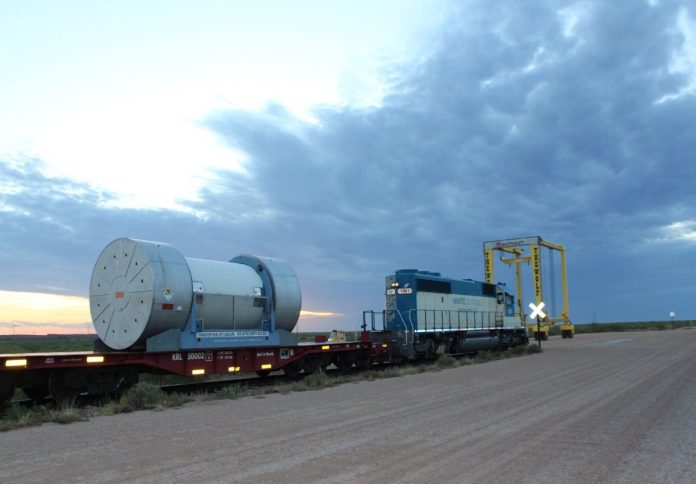
The report outlines how Orano Federal Services, working with the University of North Carolina at Charlotte, has revisited the use of 3D printing to manufacture impact limiters—structures designed to protect transportation casks carrying spent nuclear fuel during accident scenarios.
“Impact limiter designs must withstand testing based on a certain significance level of hypothetical accidents,” the report notes, citing requirements that include drops, crushing forces, fires and water immersion.
These components are currently manufactured using materials such as redwood, balsawood or aluminum honeycomb, processes described as costly and complex.
According to the study, earlier limitations in additive manufacturing – particularly the inability to produce components at the required scale – had restricted its application.
However, “an updated study has revealed that not only can AM printers produce substantially larger objects, but new internal patterns have been created that have the potential to provide advantages for impact limiters,” the authors said.
Despite these advances, the report emphasises that additive manufacturing is not yet capable of producing a full-scale impact limiter as a single unit. Instead, current approaches rely on assembling multiple printed components.
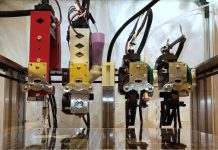
Two manufacturing methods – fused filament fabrication (FFF) and selective laser melting (SLM) – were identified as the most viable options for producing these parts.
The research also points to the emergence of new internal lattice structures, particularly the “gyroid” infill pattern, which showed improved performance in testing.
“The gyroid infill pattern… has strength in all directions” and can reduce weight significantly, the report states, adding that compression tests demonstrated better energy absorption compared with traditional honeycomb designs.
Still, the findings present a balanced view of the technology’s readiness. While simulations and small-scale tests suggest that additive manufacturing designs could match or approach the performance of conventional materials, the report cautions that “there is a lack of standards, specifically nuclear-grade standards,” governing their use. Existing guidelines, such as ISO/ASTM standards, are described as insufficient for nuclear safety applications.
Cost remains a central consideration in the manufacturing discussion. Traditional impact limiters can cost up to $1 million each, largely due to materials and labor-intensive assembly.
The study estimates that additive manufacturing could reduce costs significantly under certain conditions, particularly when lower-density infill designs are used. “Infills at lower percentages result in cheaper AM impact limiter designs,” the report states, noting potential savings exceeding $1 million per unit in some scenarios.
At the same time, the report underscores that economic benefits depend heavily on factors such as printer costs, material prices and production scale, and that additive manufacturing is not yet universally cost-effective for full-scale deployment.
Looking ahead, the timing of these manufacturing developments is linked to anticipated increases in spent nuclear fuel transport in the United States.
The U.S. Department of Energy is expected to establish an interim storage facility within the next 10 to 15 years, which could drive demand for transport systems and associated components.
However, the authors stress that further validation is required before additive manufacturing can be widely adopted in this context.
“The path forward is focused on the development of codes and standards for AM components,” the report concludes, adding that full-scale testing will likely be necessary to demonstrate performance under regulatory conditions.