Article By Chris Johnson, managing director of bearing specialist SMB Bearings
Medical devices are becoming smaller, lighter and more portable. From handheld diagnostic tools to wearable infusion pumps and compact surgical instruments, reduced size is now a defining feature of many new Medtech products.
While miniaturisation brings clear benefits for patients and clinicians, it also introduces mechanical constraints that can influence how reliably these devices perform over time.
Here, Chris Johnson, managing director of bearing specialist SMB Bearings, explores how mechanical decisions that once seemed secondary can begin to dictate overall product success.
In emergency care settings, smaller equipment can be transported directly to the patient, reducing delays when time is critical. The NHS’s continued investment in robotic surgery reflects this trend, with NHS England projecting that robotic systems could support up to 500,000 procedures per year by 2035, highlighting a growing demand for compact and flexible technologies.
As these systems move closer to the patient and into more varied clinical settings, the mechanical demands placed on their internal components increase. Compact rotating assemblies are now expected to deliver precise movement, dosing or sensing within very limited space.
UK-developed systems like the Versius Surgical Robot were designed to be compact and easily moved between operating theatres, rather than fixed in a single room. The system has now been used in over 30,000 procedures worldwide, demonstrating how miniaturised mechanical design is no longer experimental but influencing real-world patient care.
Bearings, as in many other technologies, sit at the centre of these systems. They support shafts, motors and gear stages in increasingly confined spaces. When space is limited, any change in friction, alignment or load distribution can have a noticeable effect on output.
Where size sets limits
One of the first limits designers can encounter, is torque transmission. As gear-motor assemblies become smaller, shaft diameters reduce and available contact areas shrink. This places a cap on how much torque can be transmitted without increasing stress on bearings and gears. In applications like drug delivery pumps or robotic surgical tools, where smooth and repeatable motion is essential, even small variations in torque can affect accuracy.
Load capacity presents a similar challenge. Bearings with smaller internal diameters naturally support lower loads, yet they are often expected to operate continuously. In wearable devices that run for hours or days at a time, this can lead to early wear if loads are underestimated. Engineers may attempt to compensate by increasing motor output, but this approach can introduce further stress within the assembly.
As motor output rises, heat generation becomes more significant as components shrink. In miniature systems, there is less mass to absorb heat and fewer pathways for it to dissipate. A slight increase in friction within a bearing can raise temperatures enough to affect surrounding materials, lubricants or electronic components. Over time, this can reduce service life or alter performance characteristics, particularly in devices that rely on steady output.
These thermal effects can also influence alignment. In compact housings, shafts and bearings operate with very tight tolerances and small changes in temperature can cause components to expand unevenly.
A misalignment measured in microns may be negligible in a larger assembly, but in a miniature system it can lead to uneven load distribution across the bearing raceways. This can cause vibration, noise or inconsistent movements, all of which are undesirable in medical applications where precision matters.
Matching materials to miniature design
Material choice plays an important role in any application. However, this becomes particularly essential when faced with a multitude of new challenges. Stainless steel bearings are widely used in Medtech because of their corrosion resistance and compatibility with cleaning agents. Grades like 440C or 316 are common in devices that may be exposed to moisture.
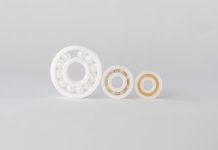
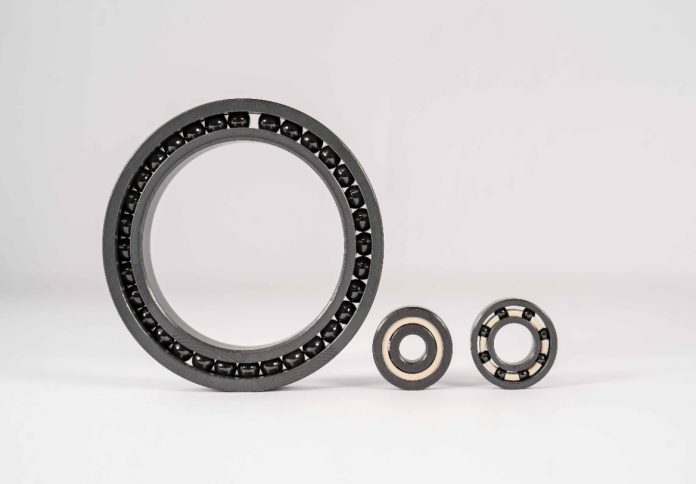
In low precision or low load applications, acetal resin bearings offer an alternative where low friction is required. These polymer bearings can reduce wear and heat generation, while also resisting corrosion and many cleaning agents. They may be suitable for compact medical devices where weight and lubrication control are key considerations. Full ceramic bearings can also be suitable where electrical insulation or chemical resistance is required.
Bearing lubrication is another area where miniature design changes the rules. Traditional greases may not behave predictably in very small volumes and excess lubricant can migrate into sensitive areas of the device. In some cases, lightly lubricated or dry film solutions offer better consistency. Engineers must also consider how lubricants respond to temperature changes and repeated use, particularly in devices intended for continuous operation.
Sterilisation adds a further layer of complexity. Many medical devices must withstand repeated exposure to steam, chemicals or radiation. These processes can affect bearing materials, seals and lubricants. A bearing that performs well during initial testing may degrade after multiple sterilisation cycles if the materials are not selected carefully. For disposable devices, cost constraints may limit material options, making correct specification even more important.
The consequences
The consequences of overlooking these mechanical factors often emerge late in development. A prototype may pass early functional tests, only for issues to appear during extended trials or validation. Excessive noise, rising power consumption or inconsistent output can prompt last-minute redesigns, which are costly and time-consuming in regulated environments. In some cases, these problems can delay regulatory approval or lead to recalls after launch.
This is why mechanical considerations should not be left until the final stages of Medtech development. Bearing selection, shaft sizing and alignment strategies benefit from early input by mechanical engineers and component specialists.
By addressing these factors at the concept stage, designers can set realistic limits on performance and avoid pushing miniature components beyond their practical capabilities.