Leafy vegetables commonly found in household kitchens could play a role in extracting valuable metals from contaminated soils, according to research from The University of Queensland.
The study focuses on so-called “hyperaccumulator” plants – species capable of absorbing unusually high concentrations of metals through their roots and shoots, the university said in a news release.
Researchers identified members of the Brassicaceae family, including kale, cabbage, broccoli, cauliflower, mustard and Brussels sprouts, as potential candidates for this process, particularly in relation to the toxic metal thallium.
University of Queensland geochemist Dr Amelia Corzo-Remigio said advanced scanning techniques had provided new insight into how these plants take up and store thallium, suggesting possible applications in mineral extraction.
“Thallium is extremely toxic, but it is also a valuable and industry critical metal used in medical technologies, optical glass, and semiconductors,” Dr Corzo-Remigio said.
“So, while posing a significant health risk to humans, many of these same Brassicaceous plants could present a clear opportunity in sustainable mining.”
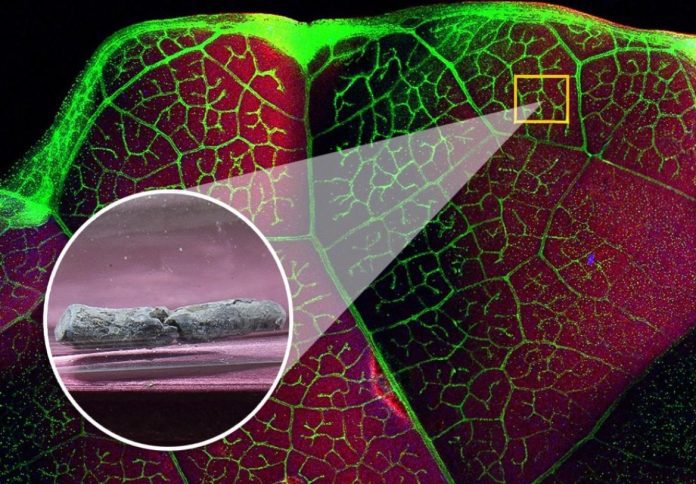
The research, conducted with the university’s Sustainable Minerals Institute, used micro-X-ray fluorescence and X-ray diffraction mapping to analyse live plants. According to Dr Corzo-Remigio, the techniques revealed that kale, or Brassica oleracea, accumulates thallium in a crystallised form within its leaves.
“Simultaneous use of micro-X-ray fluorescence and X-ray diffraction mapping on live kale plants gave us an unprecedented view of how and where thallium is located in these plants,” she said.
“In particular, we found thallium chloride crystal deposits along the veins inside the leaves. This indicates potential for phytomining and, potentially, a sustainable thallium supply.”
Despite the known ability of these vegetables to accumulate thallium – prompting monitoring for food safety risks – the study notes that there has been limited research into how this trait could be harnessed for resource recovery.
Researchers from the Sustainable Minerals Institute’s Centre for Environmental Responsibility in Mining said non-conventional approaches such as phytomining could become increasingly important in securing metals needed for medical technologies and the transition to renewable energy systems.
Dr Corzo-Remigio said the approach may also address environmental challenges linked to traditional mining.
“There’s a dual need to remediate and rehabilitate soils while also supplying critical elements in the most sustainable way possible,” she said. “It looks like plants in the Brassicaceae family can be part of the answer.”
The findings have been published in the journal Metallomics. The research involved collaboration with institutions including Wageningen University and Research in the Netherlands, the University of Adelaide, Queensland University of Technology, and the Deutsches Elektronen-Synchrotron in Germany.