Australian researchers at RMIT University have developed a smart wound dressing that can both monitor and treat wounds, a development they say could improve care for patients with chronic wounds.
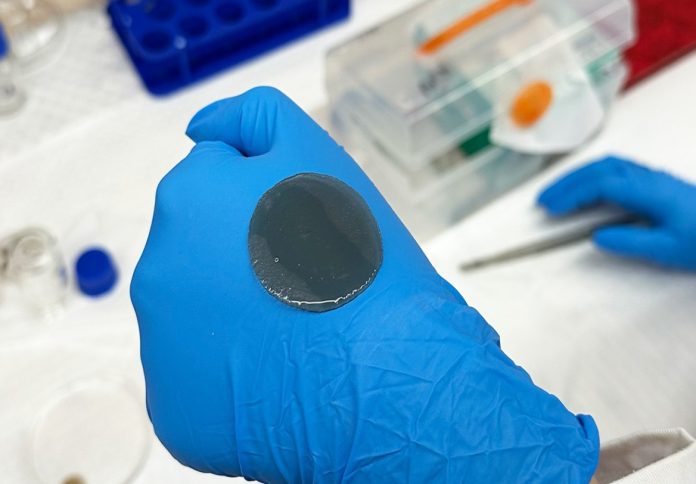
The dressing uses carbon-based nanoparticles, known as carbon dots, embedded in a hydrogel. These particles act as sensors and therapeutic agents. The patch changes colour when the pH of a wound shifts – potential sign of infection – which can be read with portable devices.
In a news release, researchers noted that when infection is detected, therapeutic nanozymes are automatically released to aid healing, or can be manually triggered by applying gentle pressure.
PhD candidate Nan Nan, the study’s first author, said the dual function could allow clinicians to respond more quickly to potential infections.
“Being able to address potential infection at the earliest opportunity is critical to chronic wound management, making this real-time system a potential game-changer for healthcare,” she said. Nan said the design also reduces the complexity of creating smart wound dressings.
“Our fabrication process using medically ready materials, such as hydrogels, to embed carbon dots is easy and scalable, with strong potential for commercial translation,” she said.
Senior Lecturer Dr Haiyan Li, a collaborator on the project, said the approach could help overcome barriers that have prevented previous smart wound dressings from reaching the market.
“Many smart wound dressings developed in research laboratories are difficult to translate into real clinical products because they rely on complex designs or expensive sensing systems,” she said.
“Our approach integrates sensing and dual-mode therapeutic functions into a single dressing with a simple, streamlined design.”
The research is currently at the laboratory stage. Lead researcher Dr Lei Bao said the next steps include testing the technology in more advanced biological models and working with industry partners to refine it for clinical use.
“Ultimately, our goal is to translate this research into practical smart wound dressings and integrate this platform into a digital health ecosystem, where the data from the patch is collected, analysed, and used to guide clinical decisions,” he said.
The study was carried out using RMIT’s Micro Nano Research Facility and Microscopy and Microanalysis Facility. It is published in Chemical Engineering Science under the title Carbon-dot nanozyme-empowered responsive hydrogels for smart wound dressing (DOI: 10.1016/j.ces.2025.123225).