Article by Paul Farrell, Senior Vice President Product Management at ECI Software Solutions,
If they’re to remain competitive long term, businesses must be forward thinking, efficient, and interpret the data they need to make better decisions.
Manufacturing in Australia is not for the faint-hearted. The domestic market is relatively small, labour and energy prices are high, and producers face higher transport costs for inputs and outputs than their less geographically isolated competitors.
Against this backdrop, Australian manufacturers need to work hard and smart to keep up with the competition, at home and abroad.
Here are five strategies that will help you set yourself up for a stronger, more prosperous future in 2026 and beyond.
Knowing your customers and market
Australia has never been a volume market and opportunities to expand are not just ‘there for the taking’. Rather, manufacturers need to keep an eagle eye on the sectors they’re active in and the customers that comprise them. In the absence of this up-to-date knowledge, identifying potentially viable expansion and diversification opportunities is a challenging exercise, and companies that get it wrong can find it costly.
Understanding your secret sauce
Just as important as knowing your market is understanding your secret sauce – the special quality that makes your business different or special. It’s almost certainly a big part of the reason your customers choose to deal with you and not a rival supplier offering broadly similar goods and services. Your secret sauce may not necessarily be the efficiency of your production process or the quality of your output. For some businesses, a super slick sales and marketing channel can provide an advantage over competitors who haven’t figured out how to reach customers in the target market as effectively.
Being crystal clear about what it is you do differently and better will enable you to keep playing to your strengths and keep the customer satisfied.
Tackling the skills shortage
Australia’s manufacturing workforce is aging, with a significant cohort of workers nearing the end of their careers.
It’s been forecast that an additional 120,000 workers will be needed by 2033 to fill the vacancies they leave and allow businesses to tackle emerging opportunities in growth industries, such as defence, clean energy, and space.
Some specialist skills can be hard to source readily, and that’s why it pays to put a comprehensive talent plan in place. Ideally, it will detail the actions you’ll take to replace those old hands as they clock off for the final time and how you’ll capture the wealth of knowledge and IP they hold in their heads, about your operations and business.
Investing in technologies that deliver genuine benefit
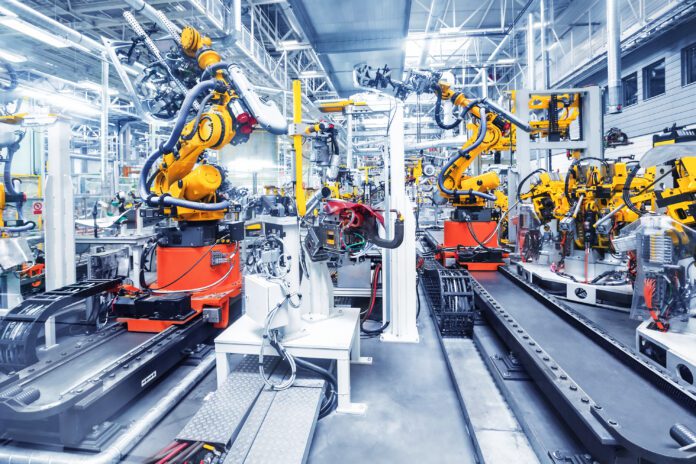
The manufacturing sector has long been awash with technology, from smart factory control systems and industrial robots to complex Internet of Things (IoT) arrays. The recent explosion of AI-powered solutions has expanded the IT smorgasbord still further, providing businesses with dozens of potential opportunities to optimise aspects of their operations with digital technology.
But, for small and medium-sized manufacturers in particular, this multiplicity of options can be a double-edged sword. There’s a very real risk of IT overwhelm – and of investing in solutions that, ultra smart and sophisticated though they may be, don’t make a measurable difference to operations.
Making a thorough market study and ensuring there’s a compelling use case for any initiative or solution you’re considering deploying will help you avoid this trap. No two businesses are the same, even if they operate in the same industry or sector, and choosing tools and technologies that are right for yours is the key to unlocking efficiencies, cost savings, and profitable growth.
Underpinning your operations with a specialist ERP solution
If you’re firmly focused on the future, one of your investments should be a specialised ERP solution designed with the unique challenges and requirements of the manufacturing industry in mind.
Elect to partner with a premium software vendor that has a stellar track record in this sector, and you’ll stand to unlock a host of very real benefits. Some of these include tighter stock control, faster cash flow, increased output, and real-time visibility into all your orders.
You’ll also enjoy access to up-to-the-minute business data that will help your leadership team react swiftly to changing conditions and make smart, data-driven decisions that keep your business moving in the right direction.
Ideally, you’ll choose a platform with built-in safeguards to keep your commercial and customer data secure, including multi-factor authentication, firewall-protected servers, and the latest generation encryption technology.
If long-term profitable growth is your aim, it’s foundation technology that’s custom-designed to help you achieve it.