Metal additive manufacturing company SPEE3D says its deployable 3D printing technology helped restore a disabled US Army combat support vehicle in less than 24 hours during a live field exercise in Tennessee, demonstrating how expeditionary manufacturing could support military readiness in remote environments.
According to SPEE3D, the demonstration involved the Tennessee Army National Guard, the University of Tennessee, Knoxville’s Defense Development and Applied Research Center (DARC), and the DEVCOM Army Research Laboratory.
The scenario centred on a combat support vehicle that had been “deadlined” after a failed Battle Lock Handle disabled the locking mechanism on its armoured door, leaving the vehicle unable to safely return to base.
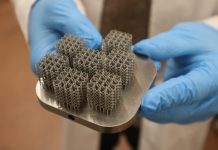
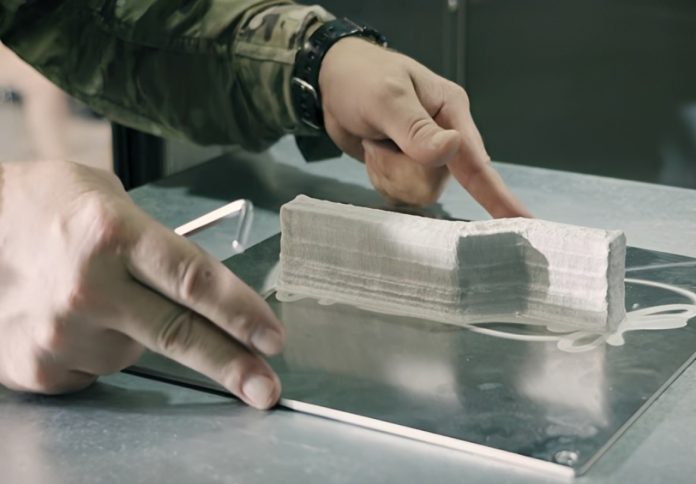
Using SPEE3D’s deployable Expeditionary Manufacturing Unit (EMU), soldiers supported by university engineers designed, printed, heat-treated and machined a replacement handle in the field using the company’s Cold Spray Additive Manufacturing process. The component was produced and installed in less than 10 hours, returning the vehicle to service during the exercise, the company said.
For the trial, the newly manufactured part was transported by drone across otherwise inaccessible terrain to the stranded vehicle, compressing what SPEE3D said can typically be a six- to ten-week logistics process into a single-day mission.
SPEE3D chief executive Byron Kennedy said the demonstration highlighted the potential role of expeditionary manufacturing in operational environments.
“Waiting weeks for a replacement part isn’t just a logistical delay, it’s a tactical vulnerability for the military,” Kennedy said.
“Our technology is there to empower soldiers with true right-to-repair capabilities at the point of need. This demonstration is an example of how our expeditionary manufacturing technology does not just fix vehicles but strengthens mission readiness and gets warfighters back in the fight safely and effectively.”
During the exercise, the team also produced additional components using the EMU, including an exhaust cover for a generator powering MEDEVAC equipment and mounting brackets for a battlefield display system intended to help prevent friendly-fire incidents.
The project was recognised at the Military Additive Manufacturing (MILAM) 2026 conference in Tampa, Florida, where the University of Tennessee’s DARC, the Tennessee Army National Guard and DEVCOM Army Research Laboratory received the Expeditionary & Tactical 3D Printing Excellence Award.
Army Lt. Col. Colby Tippens, executive officer of the 278th Armored Cavalry Regiment, said the collaboration aimed to strengthen the Army’s ability to maintain critical systems in deployed environments.
“We wanted to maximise the value-added of this initiative with our soldiers and partnership with ARL, UT and SPEE3D to grow our expertise in this field and then serve as a force multiplier to other Army units,” Tippens said.
“If we can give our Soldiers the ability to build critical repair parts in a timely manner that will help improve combat power, enhance readiness, and reduce risk and our logistics footprint that could ultimately help save Soldiers’ lives.”