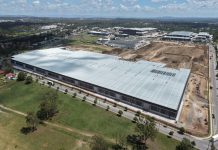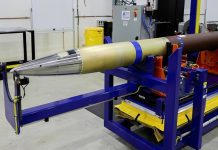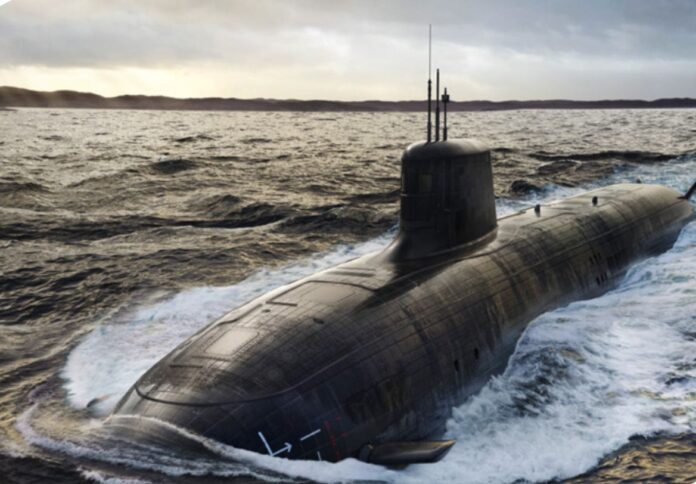
The Australian government announced in late February a $310 million acquisition of nuclear submarine components from the United Kingdom. The payment will support the manufacture of nuclear-powered submarines to be built in Osborne, South Australia. The investment follows a larger GBP 2.4 billion Australian contribution to expand Rolls-Royce Submarines’ production capacity.
Amid these procurements, a leading expert warns Australia faces a critical workforce challenge that could undermine these efforts.
In an exclusive interview with Australian Manufacturing, Professor Yiannis Ventikos, dean of engineering at Monash University, warned that Australia is falling behind in terms of workforce development compared to the pace required by SSN-AUKUS timelines.
Australia’s readiness in a nutshell
Ventikos, who has led major collaborations in defence innovation and co-founded First Light Fusion, a UK-based fusion energy technology company, said building nuclear submarines demands a self-sustained, self-reliant workforce. This means a continuous pipeline of knowledge transfer that must function across every level of technical expertise.
However, developing this workforce is a multidecadal affair, Ventikos noted. An undergraduate degree requires four to five years, a Master’s two years, and a PhD three to four years. For that PhD graduate to gain sufficient postdoctoral experience, secure an academic post, and develop a mature research program takes another five to six years.
“To reach some kind of self-perpetuating, self-sustained steady state, a time interval of 13 to 15 years is necessary,” warns Professor Ventikos. “As the saying goes, the best time to plant a tree is 25 years ago. The second best time is now.”
When asked how Australia compares to AUKUS partners in terms of workforce development, he approached the question from two angles:
“First, do we have the technical capacity, environment and institutions capable to develop this specialised workforce? Second, are we currently undertaking the steps necessary for this to happen at a pace, volume and level commensurate with the AUKUS Pillar I ambition? The answer to the first aspect is a very emphatic yes, whereas the answer regarding the second is, to the best of my understanding, no,” the dean explained.
The key? A well-functioning ensemble.
Nuclear submarine capability, Ventikos explains, thrives only when three distinct sectors work in harmony: defence stakeholders, industry partners, and research institutions.
The defence pillar includes agencies like the Australian Submarine Agency, the Defence Science and Technology Group, the Advanced Strategic Capabilities Accelerator, the Department of Defence, and the Royal Australian Navy.
The industry pillar spans from established defence primes to small and medium enterprises, either already in the defence space or looking to enter it. The third pillar encompasses universities and research organisations like CSIRO and ANSTO that support both innovation and workforce development.
Within this framework, the Australian government’s role becomes clear: reducing risk for these collaborations to flourish.
This “derisking” can come in a two-step process: strategic co-investment to encourage other stakeholders to participate, and providing confidence guarantees – similar to letters of intent in business – that assure them of returns on their investments.
From submarines to supply chains
The dean describes submarines as the quintessential system of systems that require expertise across multiple domains – many with significant civilian applications.
These crossover capabilities, according to Ventikos, would position Australia as a competitive player in cleantech, aerospace, medtech, and other high-value manufacturing sectors, creating a technological foundation that extends far beyond the original defence investment.
“The construction phase involves learnings and an uplifting/upskilling of so many industrial sectors that will leave a long-lasting legacy by itself,” the professor emphasised. This process will enable Australian manufacturing companies to develop “highly marketable capabilities.”
It will also foster new supply chains where “the confidence to tackle bigger and more involved manufacturing tasks, for local use or for export, will emerge naturally.”
Ventikos notes that submarine operations require ongoing expertise in monitoring systems, IT and AI integration, sensing technologies, and smart manufacturing—including additive and 3D printing for critical components.
These demands, according to the professor, will need to act as a nucleus for industry or academia concentrations and “lead to substantial development of dual-use sovereign capability that will push economic growth.”
Ultimately, the question facing Australia is not simply whether the country can build submarines – it is whether it will seize the opportunity of developing the workforce required for sovereign capability.