Australian businesses investing in warehouse automation should prioritise solution design and operational data before selecting equipment, according to Swisslog.
In a news release, Swisslog Australia and New Zealand Director of Sales Steve Dimitrovski said businesses should assess how automation would operate within their broader warehouse environment, rather than focusing solely on individual technologies.
“Automation is a significant investment, so businesses need to look beyond what the system can deliver on day one,” Dimitrovski said.
He said effective design should take into account historical order profiles, SKU velocities, inventory levels, peak demand and potential changes in fulfilment requirements.
“Designing around an average day can give you a very different result from designing around the reality of your operation,” Dimitrovski said. “You need to understand what happens when volumes increase, when the order profile changes and when multiple channels are being fulfilled at the same time.”
Swisslog said simulation modelling can also help identify potential bottlenecks before equipment is ordered. For automated systems such as AutoStore, modelling can be used to assess different combinations of robots, bins and ports against changing throughput requirements.
“Simulation gives you an opportunity to identify problems before they become expensive problems on the warehouse floor,” Dimitrovski said.
The company also said future expansion should be considered during the initial design process. While modular automation can allow capacity to be increased over time, Swisslog said scalability depends on decisions made at the outset.
“Growth needs to be designed in, rather than treated as an afterthought,” Dimitrovski said.
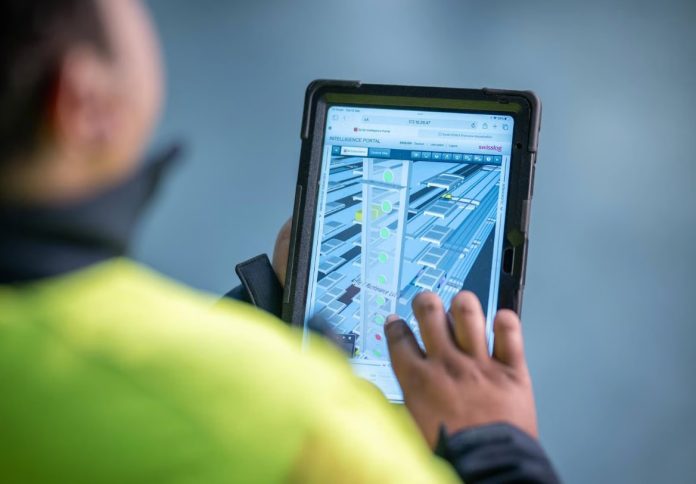
Software integration is another consideration as warehouses combine robotics, automated storage, conveyors and sortation systems. Swisslog said its SynQ software platform is designed to provide an integration and orchestration layer across automated material flows.
Dimitrovski said businesses should look beyond equipment specifications and headline pricing when comparing automation proposals.
“Two proposals can look very similar on paper, but the depth of the design work behind them can be very different,” he said.
“The right questions are: what data has been used, what scenarios have been tested, where are the constraints, and how can the system expand in the future?”