
Australia’s growing pipeline of investment in advanced manufacturing, energy, data centres and critical infrastructure is placing pressure on the workforce and project delivery models needed to bring major developments online.
The challenge comes as project owners contend with skills shortages, rising costs and increasingly complex facilities, prompting renewed attention to how engineering, procurement and construction processes can be organised more efficiently.
In an exclusive interview with Australian Manufacturing, Adam J. Shaw, CEO of Accenture Construct, said standardised designs, modular construction and artificial intelligence (AI) could help address some of these constraints.
Accenture launched Accenture Construct in September as a global business bringing together engineering, project delivery, data and AI capabilities for major capital projects. The business comprises more than 5,000 practitioners and focuses on sectors including advanced manufacturing, data centres, utilities, transport and process industries.
Shaw said Australia’s capacity constraints extended across both professional and trade-based roles, with design resources also under pressure. He cited Infrastructure Australia’s estimate of a shortfall of about 141,000 workers, potentially rising to nearly 300,000 by 2027.
“The answer is changing how design is done: catalogue solutions over first-principles engineering, AI taking on routine work, modular instead of built on site,” Shaw said.
Shifting towards outcomes in manufacturing projects
Shaw said traditional payment arrangements for capital project services, including time-and-materials and fixed-price contracts, generally focused on the effort required rather than the results achieved.
He argued that advances in AI and digital tools created an opportunity to reconsider these models, with payments linked to measurable project outcomes.
“Neither pays for what the owner actually needs, which is a plant producing at the right cost, on the right date,” he said.
Under outcome-based arrangements, payments could be linked to capital cost savings against a business case or revenue generated by bringing production online earlier, according to Shaw.
He said Accenture Construct was designed to combine engineering, project delivery, data and AI within one accountable team, while acknowledging that project owners would also need to change how they engage contractors and measure success.
For Australian manufacturers, Shaw identified opportunities to use AI to accelerate early project planning, prepare estimates and approval documents, and generate reporting from live project data.
He said these applications could allow engineers and project teams to spend more time addressing technical challenges and making decisions.
Standardisation and modular construction to reduce delays
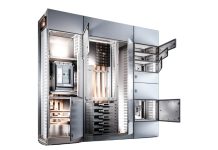
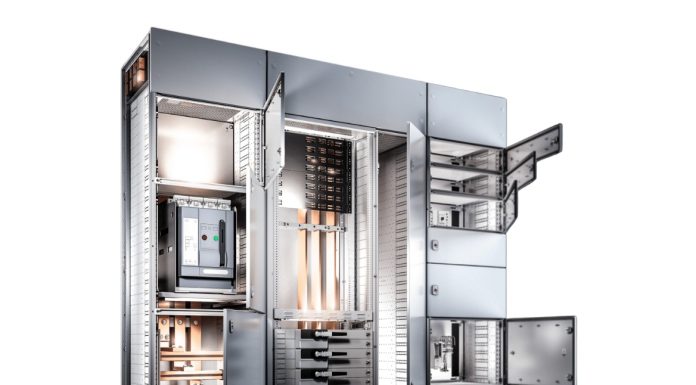
Shaw said standardised designs and catalogue-based procurement could reduce the need to design every component from first principles, while modular construction could shift some work from project sites into factories.
He said modular approaches could support more consistent production and allow components to be manufactured in controlled environments before being transported to construction sites.
“We’re currently working with major owners on using AI to improve the quality and compliance of approval submissions,” Shaw said, adding that better submissions could reduce rework and delays between approval rounds.
He also pointed to the potential for a common project data foundation to improve visibility of costs, schedules, risks and performance.
On complex projects, Shaw said problems could reach senior decision-makers after the most effective responses were no longer available.
A shared data foundation, he said, could help executives identify issues earlier and make decisions while more options remained open. Consistent data capture across successive projects could also help manufacturers and project owners apply lessons from earlier facilities to later developments.
Australian manufacturers could benefit from larger project pipelines
Shaw said Australian manufacturers had an opportunity to supply prefabricated and modular components for major resources and infrastructure projects, provided they could scale production to meet demand.
He cited overseas projects that have used standardised equipment, catalogue procurement and factory-built components across mining, rail and port infrastructure.
“Australia has the manufacturing capability to supply that kind of work, especially if owners here adopt the same approach,” he said.
However, Shaw said manufacturers would need greater confidence in the longevity of demand before committing to expand their production capacity.
He argued that project owners could support this investment by making firm purchasing commitments and providing clearer signals about expected volumes.
“Owners have a big role to play. How they contract and engage shapes how the whole industry delivers,” Shaw said.
“The buyer has to move first,” he added.