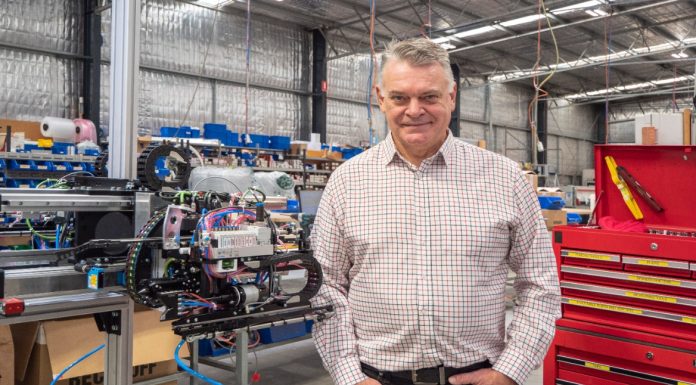
Article by Phil Scanlon, Senior VP, Global Solution Engineering, Solace
The past few years have been challenging for manufacturers in APAC. The COVID-19 pandemic brought supply chain disruptions, government restrictions, and heightened uncertainty around demand and supply.
As we emerged from the pandemic, manufacturers continued to grapple with sluggish global demand and a smaller workforce. By the end of 2022, S&P Global had categorised the overall Purchasing Managers’ Index (PMI) for Asia as “worrying”. The deterioration in growth conditions was underpinned by a quicker decline in new orders and continued slow global demand.
Amidst these challenges, manufacturers have increased their digital investment over the past few years. With a view to enabling greater agility and supply chain visibility, manufacturers have accelerated the adoption of emerging technologies – in fact, according to Rockwell Automation, close to half (44%) of APAC manufacturers plan to adopt smart manufacturing within the next year.
Certainly, the adoption of new technologies will help unlock new growth horizons. The promises of Industry 4.0 — to create a more efficient, flexible, and connected manufacturing ecosystem — will also drive future competitiveness for APAC factories. Still, the realisation of these benefits requires more than just adoption of new technology. In many cases, a holistic approach to smart factory initiatives is necessary.
The truth is, existing technologies used in the factory by manufacturers can be quite old, and act in isolation. Many manufacturers have legacy systems that were not designed to scale, handle modern demands, and even manage security breaches. Furthermore, outdated systems may not be able to integrate with newer technologies or processes, and can be expensive to maintain as the technology continues to age – all of which result in data silos, lost productivity, higher maintenance costs and operational inefficiencies. Functioning on outdated systems can significantly hinder manufacturers’ ability to compete in today’s landscape, so how can manufacturers create more efficient and responsive systems?
To build a lasting foundation for Industry 4.0 and smart factories, manufacturers first need to establish real-time data movement across their operations.
Smart factories are not just places where manufacturing processes take place with the aid of Internet of Things (IoT) devices or cloud technology. They should, ideally, provide manufacturers with the opportunity to self-optimise performance, adapt and learn from new conditions in real-time, and autonomously run entire production processes. Events happening in the manufacturing process need to be made instantly available to interested applications and parties both within and outside the organisational boundaries. To do this, the smart factory needs to first unlock, then leverage real-time data, to learn, and make predictions, with the end-goal of maximizing overall equipment effectiveness and operational efficiency.
Real-time data is what unlocks all these possibilities, from supply chain optimisation, to predictive maintenance, and quality control. GPS trackers, leveraging real-time data, can be used to track the movement of goods through the supply chain, which allows manufacturers to identify and act on bottlenecks instantaneously; real-time data from sensors on machinery can be used to predict and schedule maintenance before a breakdown occurs; and the quality of products can be monitored as they are being manufactured, so manufacturers can best identify and correct quality issues.
That said, having access to real-time data is simply not enough. Manufacturers also need to have infrastructure that allow and connect real-time data movement in place, to meet the increasing demand for innovation, agility, and scalability. All of this can be facilitated through an event-driven architecture (EDA), a software pattern that enables the flow of data and interactions (also known as events) between different applications or systems in real-time. To that end, manufacturers tap on an event mesh – a real-time data network that can distribute data from IoT devices or applications to other manufacturing systems and applications that require the information to perform their functions.
Consider this chain of events: Components needed to manufacture a car have been placed and ordered, but due to logistic delays in the supply chain, the parts are unable to be delivered within the stipulated time. By having the supply chain and manufacturing process interconnected through EDA, manufacturers can make informed decisions in real-time, such as readjusting the production line or even look to source the components from alternative suppliers – keeping overhead expenditure to a minimum. Without an event-driven ecosystem, the bulk of these processes and systems cannot be updated or monitored in real-time, and results in a much less efficient factory that relies heavily on manual input.
On top of implementing EDA, a fast and always available network layer – such as 5G – is needed to facilitate the flow of data across the network. Most importantly, manufacturers need to adopt an events-driven mindset, and be willing to invest in new technologies that build the foundation for transformational growth.
EDA has become essential for any organisation that seeks real-time intelligence for their leadership and bottom line, and will be a game changer for manufacturers in APAC during the transition to Industry 4.0. A recent study conducted by IDC found that investing in EDA delivered substantial ROI for the manufacturing industry globally, with benefits including increase in employee productivity (24.1%), reduced operational costs (19%), and increased revenue (17.7%).
Adopting EDA should be top of mind for manufacturers in APAC, in order to differentiate themselves from the laggards in today’s fast-changing economy.