Australia has faced ongoing concerns over medicine supply in recent years, with reliance on imported pharmaceuticals and periodic shortages prompting greater attention on domestic manufacturing capability and supply chain resilience.
Against this backdrop, pharmaceutical manufacturers are investing in expanding local production to strengthen Australia’s capacity to manufacture medicines onshore.
In an exclusive interview with Australian Manufacturing, conducted following the official opening of the Eastern Creek facility, Dr Aniss Chami, chief executive officer of Vitex Pharmaceuticals, outlined the company’s rationale for the investment, its expansion into registered medicines manufacturing, and why the family-owned business has continued investing in Australian production rather than pursuing lower-cost offshore alternatives.
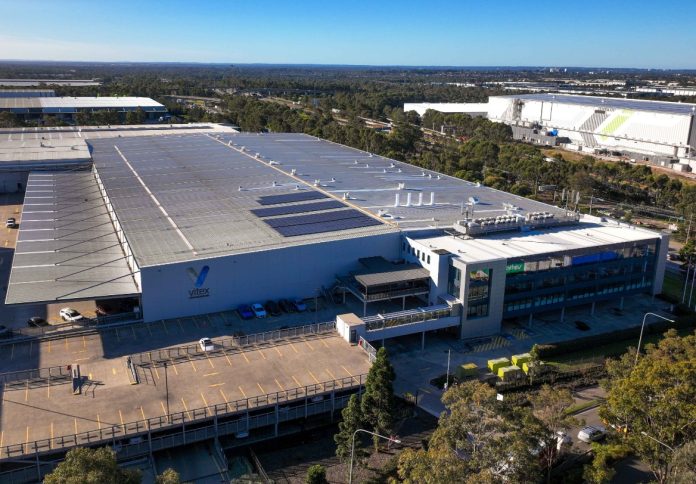
The new Eastern Creek facility, known as Wonderland, officially opened on 3 July. The site triples the company’s production footprint while adding manufacturing capabilities across gummies, liquids, creams and probiotics. The expansion also extends Vitex beyond complementary medicines into registered medicines, including Schedule 4 prescription products.
Responding to Australia’s medicine supply challenges
According to Dr Chami, the investment was driven by concerns about Australia’s reliance on imported medicines and recurring supply shortages.
“This investment was a direct response to a vulnerability we saw play out in real time,” he said.
“In 2023, 61 per cent of medicines supplied in Australia were imported, and by mid-2024 more than 400 medicines were in shortage, affecting everything from cardiovascular disease to depression and hormone therapies.”
Dr Chami said the expanded facility would enable Vitex to broaden its manufacturing scope.
“Wonderland triples our production footprint and, critically, extends our licensed capability from complementary medicines into registered medicines, including Schedule 4 prescription products,” he said.
“That means we’re now positioned to help close genuine gaps in Australia’s domestic medicine supply, not just add capacity to what we already made.”
Engineering for expanded manufacturing
The increased production capacity required substantial changes to the site’s infrastructure and manufacturing systems, according to Dr Chami.
“Scaling into new dosage formats isn’t just about floor space — it’s a complete reimagining of the plant’s engineering backbone,” he said.
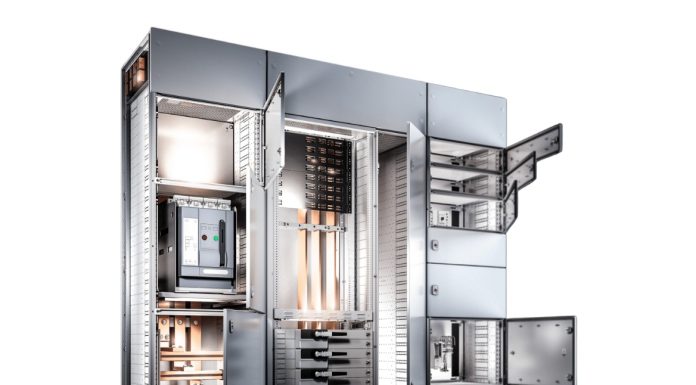
Dr Chami said the facility expanded from one electrical substation to five, with a combined supply of around 11,000 amps and more than 130 kilometres of cabling throughout the building.
He added that environmental controls were also upgraded with 68 air handling units and 26 dehumidifiers, alongside dedicated manufacturing lines including high-capacity solid blenders, a liquid blender, automated stick packaging, pastille formation and softgel encapsulation.
“Every one of those systems had to be purpose-built and validated to pharmaceutical-grade standards before a single gummy or cream could be produced at scale,” he said.
Contract manufacturing under one roof
Vitex manufactures products on behalf of multiple brand owners, providing services from formulation through to finished products.
“As a contract manufacturer, we’re the unseen hand behind a lot of Australia’s most trusted brands,” Dr Chami said.
“A client brings us an idea, and we carry it all the way to the shelf.”
He said operating formulation, testing and packaging under one roof helps streamline production while maintaining quality standards.
“Our quality systems have to be robust enough to serve multiple brand partners simultaneously, all under the one TGA licence and GMP framework, so there’s no daylight between our standards and theirs,” he said.
“In practice, that discipline is what drives speed… It’s also where innovation happens — we’re often solving formulation or format challenges alongside our clients, not after the fact.”
Why manufacturing has remained in Australia
While many manufacturing sectors have shifted offshore over recent decades, Dr Chami said Australia’s regulatory framework has supported domestic production of complementary medicines.
“I think it comes down to trust, and to the way Australia actually regulates this category,” he said.
“Everywhere else in the world, complementary medicines are regulated as a dietary supplement or a food. In Australia, the TGA regulates them as a medicine — which means our manufacturing has to meet medicine-grade standards, not food-grade ones.”
He said Australia’s regulatory requirements have helped establish a reputation for quality in export markets.
“Companies that chased lower-cost manufacturing offshore often found the savings didn’t hold up once you accounted for quality risk and supply reliability,” Dr Chami said.
“Our family made the opposite bet decades ago — investing in people, equipment and capability here — and Wonderland is really the culmination of that conviction.”
Focus on supply chain resilience
Dr Chami said recent global disruptions have reinforced the importance of domestic manufacturing capability.
“It’s central,” he said when asked about local manufacturing’s role in supply chain resilience.
“We’ve seen what happens when the model relies on long, fragile offshore supply chains — COVID exposed it, and more recently, disruption in the Middle East has reinforced how quickly global supply can be interrupted.”
He said bringing production, testing and packaging together at a single Australian site reduces potential points of disruption.
“At full capacity, our combined operations will produce close to 30 billion doses annually. That’s sovereign capability in the most literal sense: medicines made in Australia, by Australians, available to Australians when they need them.”
Expanding into registered medicines
The Eastern Creek facility also enables Vitex to manufacture registered medicines, including Schedule 4 prescription products, which require additional regulatory compliance.
Dr Chami said Wonderland has completed Therapeutic Goods Administration inspection and is licensed under the Therapeutic Goods (Manufacturing Principles) Determination, aligned with the PIC/S Guide to Good Manufacturing Practice.
He said the facility supports manufacturing, packaging, labelling, testing and release for supply across tablets, capsules, powders, liquids and topical preparations.
“From an infrastructure standpoint, that meant building controlled and cleanroom environments to a standard beyond what complementary medicines manufacturing requires,” he said.
“The environmental control systems, the segregation between production zones, and the validation processes all had to be built for registered-medicine-grade compliance from day one.”
Competing through regulatory standards
Vitex currently exports to 26 direct international markets. Rather than competing primarily on production costs, Dr Chami said the company’s export strategy centres on Australia’s regulatory reputation.
“We don’t compete on cost with lower-cost offshore hubs, and we’ve never tried to,” he said.
“We compete on trust.”
Dr Chami said customers in markets including China, Vietnam, Thailand, New Zealand and South Korea choose Australian-manufactured products because of the Therapeutic Goods Administration’s regulatory framework.
“That regulatory reputation is a genuine commercial asset in export markets where consumers and regulators are increasingly scrutinising where and how medicines are made,” he said.
“Wonderland strengthens that position further and gives our international partners more capacity and more format options, without any compromise on the compliance standard that got us into those markets in the first place.”
The Eastern Creek facility officially opened on 3 July, marking a significant expansion of Vitex Pharmaceuticals’ manufacturing operations. Through the investment, the company aims to increase domestic pharmaceutical manufacturing capability while supporting both Australian medicine supply and export markets.
This article contains information provided by Vitex and is intended for general use only. It does not take into account your personal, professional, or business circumstances.