Manufacturing could become more flexible for interactive products with a new 3D-printing system developed by MIT researchers that allows objects to change their surface appearance in response to use, without relying on electronics.
The system, called ShiftLens, combines optical layers with mechanical components so a single 3D-printed object can display different images or patterns when it is pressed, slid or turned. MIT said the objects can be produced in one pass using a multimaterial 3D printer.
The researchers said the approach could support manufacturing of products such as warning signs, packaging and other objects that need to communicate information through changes in appearance.
“With our system, an object can tell you whether you are using it properly, without the need for sensors or any complicated electronics,” said Yunyi Zhu, a graduate student in MIT’s Department of Electrical Engineering and Computer Science and lead author of the research.
The ShiftLens system uses two optical layers: an array of small lenticular lenses and an underlying patterned layer containing strips of images representing different visual states. Movement between the layers changes which parts of the patterned layer are visible, altering the object’s appearance.
MIT said the approach is intended to address some limitations of electronic components, which can be vulnerable to water, chemicals or physical forces such as twisting and pressing.
“The biggest challenge in this project was to make sure all moving parts align,” Zhu said. “We need to make sure that the optical effect, mechanical linkages, and computational graphics align with one another.”
The researchers also developed a design tool that automatically generates a 3D-printer-ready ShiftLens structure based on inputs such as the desired visual states and the shape of an object. However, the system is not compatible with every object because it requires movement between the optical layers.
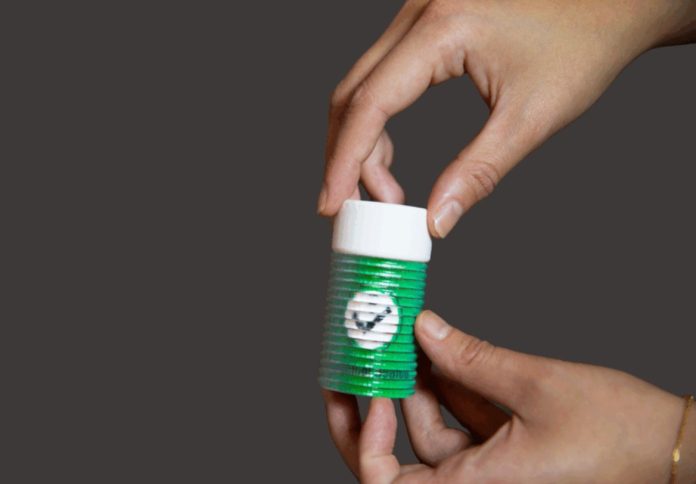
Demonstrations included a chemical bottle that displays a green check mark when its cap is securely tightened and a red exclamation mark when it is loose. The researchers also produced a tic-tac-toe game in which turning a knob changes individual squares between a red X, blue O or no letter.
Zhu said the techniques could potentially be scaled for commercial and industrial applications, including objects that provide visual indications of problems.
“With ShiftLens, users can control what an object looks like while they are using it,” she said.
The research is due to be presented at the ACM Symposium on User Interface Software and Technology.
The researchers said future work will focus on reducing the number of inputs required to generate ShiftLens structures and supporting a wider range of actuation mechanisms.