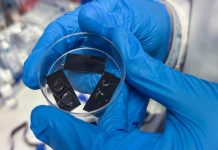
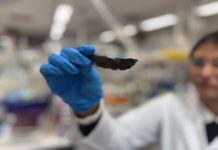
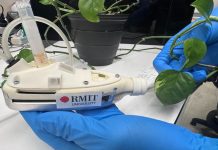
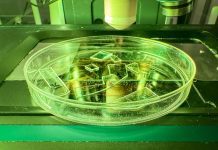
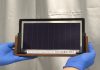
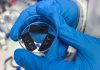
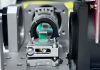
Researchers at RMIT University have developed and tested a wastewater treatment approach that removed more than 90 per cent of microplastics by combining microbubbles and nanobubbles during the treatment process.
According to RMIT, the dual-bubble method builds on the widely used dissolved air flotation process and could be adopted by wastewater treatment plants without major infrastructure changes by optimising existing operating conditions, including air pressure, saturation time and bubble size.
Lead author Associate Professor Biplob Pramanik, director of RMIT’s Water Effective Technology and Tools Research Centre, said the findings point to a practical way to reduce microplastic pollution.
“Wastewater treatment plants are a major pathway for microplastics as they slip through filtration processes, posing risks to ecosystems and human health,” Pramanik said.
“Our approach is simple to implement and significantly increases the removal of microplastics during the primary stage of treatment.”
The study found that combining microbubbles and nanobubbles achieved higher removal rates than using either type of bubble alone. According to the researchers, microbubbles provide the lifting force needed to carry particles to the surface, while nanobubbles improve particle attachment and aggregation, increasing the effectiveness of the process.
Dr Sirajum Monira, who completed the research during her PhD at RMIT, said the approach remained effective under realistic wastewater conditions.
“Organic matter and fats, oils and grease, which are typically considered barriers to treatment, did not reduce performance,” Monira said.
“In some cases, they improved it by helping microplastics clump into larger, more easily removed particles when combined with standard coagulants.”
She added that removing microplastics earlier in the treatment process could also reduce their accumulation in sewage sludge.
“By capturing the microplastics before they become concentrated in sewage sludge, we can reduce the amount entering biosolids and ultimately minimise their release back into the environment,” Monira said.
RMIT said the technology has so far been demonstrated at laboratory scale and the research team is seeking industry partners to validate the approach under real operating conditions across different wastewater streams.
The findings were published in the journal ACS ES&T Water in a paper titled Micro-Nanobubble Integrated Dissolved Air Flotation: A High-Efficiency Strategy for Microplastic Mitigation in Wastewater.