
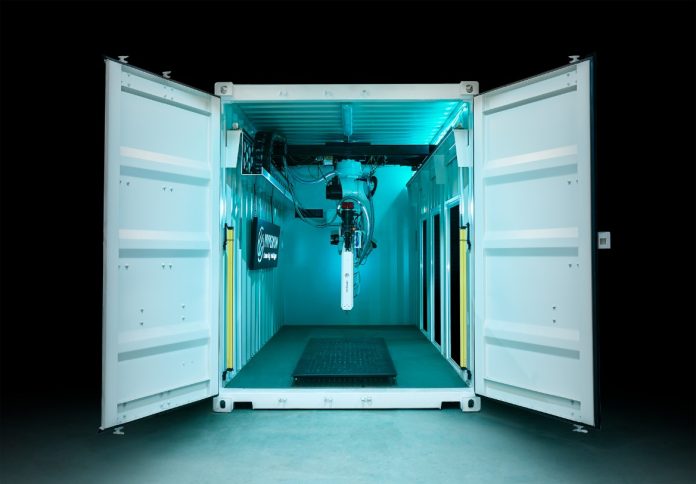
Schneider Electric has partnered with Australian advanced manufacturing company Hyperion Systems to integrate industrial automation and control technologies into a containerised 3D printing platform designed to produce replacement parts and maintenance tooling closer to industrial operations.
The partnership will support Hyperion Systems’ TitanCell platform, which uses large-format 3D printing to manufacture industrial components for sectors including mining, defence, marine and construction.
According to Schneider Electric, the system is designed to address supply chain challenges faced by industrial operators, particularly in remote locations where sourcing replacement parts can involve lengthy procurement lead times, complex freight logistics and additional costs.
Schneider Electric will provide industrial controllers, sensors, automation software and technical expertise to support the control and monitoring of TitanCell’s manufacturing processes.
Darren Butler, vice president of industrial automation at Schneider Electric, said the partnership addresses challenges associated with accessing critical parts and manufacturing capabilities.
“Hyperion has taken a practical approach to a challenge facing Australian industry: how to access critical parts and manufacturing capability when traditional supply chains are difficult to reach,” Butler said.
He said the company’s automation technologies would help Hyperion control, monitor and manage its manufacturing processes, providing a foundation for further integration of automation into its equipment.
Hyperion Systems founder and CEO Joshua Wigley said TitanCell was designed to bring manufacturing capabilities closer to the operations that need them.
“TitanCell is designed to bring manufacturing capability closer to the operations that need it, giving industries a practical way to produce suitable parts and components locally, particularly in remote locations,” Wigley said.
He added that Schneider Electric’s industrial control technologies would support the operation and monitoring of Hyperion’s manufacturing systems as the company expands its capabilities.
Hyperion is also developing circular manufacturing processes using selected recycled polymer materials. The company recovers, compounds and validates suitable materials for use as manufacturing feedstocks, providing a pathway for recoverable polymers to be reused in industrial production.
The partnership combines these material initiatives with industrial automation and deployable manufacturing equipment, although the companies did not specify production capacity, deployment timelines or expected cost savings.