Researchers at UNSW Sydney say a new approach to fertiliser manufacturing could reduce emissions and clean up waterways by converting waste carbon dioxide and nitrogen pollutants into urea using renewable electricity.
The study, recently published in Nature Communications, outlines a process that aims to address the emissions intensity of conventional urea production, which typically relies on fossil-fuel-powered, high-temperature and high-pressure systems.
Corresponding author Associate Professor and Scientia Fellow Dr Rahman Daiyan, from UNSW’s School of Minerals and Energy Resources Engineering, said the research forms part of a broader effort to decarbonise the entire fertiliser chain.
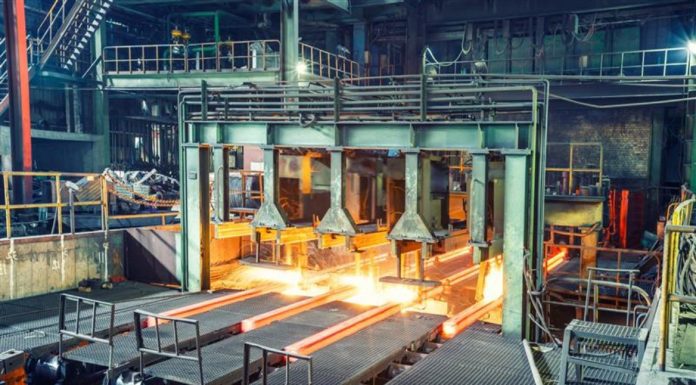
“Urea is the fertiliser used to feed the crops for more than half of the world’s population,” Dr Daiyan said. “But currently, it’s made from natural gas or coal. It’s a very fossil-fuel intensive, high-temperature, high-pressure technology with huge emissions.”
Globally, around 40 billion tonnes of carbon dioxide were released in 2024, while nitrogen pollutants such as nitrate and nitrite from agriculture and industry continue to contaminate waterways and ecosystems.
The UNSW team sought to link these two challenges by directly coupling carbon dioxide with nitrogen pollutants through an electrochemical reaction powered by renewable energy.
Study first author and UNSW PhD student Putri Ramadhany said forming a stable bond between carbon and nitrogen molecules in a controlled way had been a longstanding challenge.
“Making carbon and nitrogen bond together in a controlled and reliable way is extremely difficult,” Ramadhany said.
“To overcome this challenge, we designed a catalyst that works at an atomic scale and can hold carbon- and nitrogen-based molecules together long enough for them to react.”
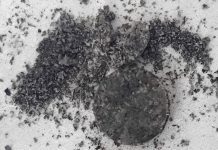
The catalyst, made of copper and cobalt, demonstrated improved urea production compared with existing systems, according to the researchers.
Dr Daiyan described the findings as a foundation for a potential circular manufacturing process that could convert captured carbon dioxide and nitrogen pollutants into fertiliser using solar and wind energy.
“The vision is zero-carbon urea where we directly couple waste carbon dioxide with nitrogen pollutants using renewable electricity, rather than relying on ammonia as an intermediate,” he said.
“That allows us to run the system on solar and wind, avoid high temperatures and pressures and reduce emissions.”
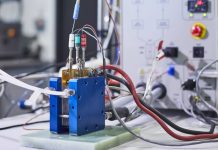
Beyond laboratory experiments, the team is working to scale the technology using urea electrolysers, equipment considered a benchmark for industrial translation.
Advanced electron-beam characterisation at the Australian Synchrotron was used to observe chemical reactions in real time, providing data to inform potential scale-up.
The research also has implications for Australia’s fertiliser supply. Despite being a major agricultural exporter, Australia remains a net importer of urea, with imports reaching about 3.8 million tonnes in 2024. Dr Daiyan said domestic production of lower-emissions urea could strengthen supply chains while reducing environmental impact.
The project focuses on using unavoidable emissions from sources such as cement production or biogenic waste, rather than direct air capture. While the technology remains under development, early laboratory results show promising selectivity, the researchers said.
Dr Daiyan, who recently discussed circular economy pathways at COP30, said moving from laboratory research to industrial deployment typically takes more than a decade but expressed hope that industry collaboration could begin within two to three years.
“Our work highlights how thoughtful catalyst engineering paired with real-time characterisation can turn environmental problems into opportunities,” he said.