Canberra-based start-up Forge Photonics has signed an agreement with Sydney defence firm Mission Systems to supply fibre optic gyroscopes for use in undersea drones, in a move both companies say highlights advances in locally developed navigation technology.
In a media release, Forge Photonics said the deal marks a milestone for the company, which is commercialising autonomous vehicle navigation systems originally developed at the Australian National University.
The company is aiming to reduce the cost of navigation systems for autonomous platforms across sectors including automotive, maritime and defence.
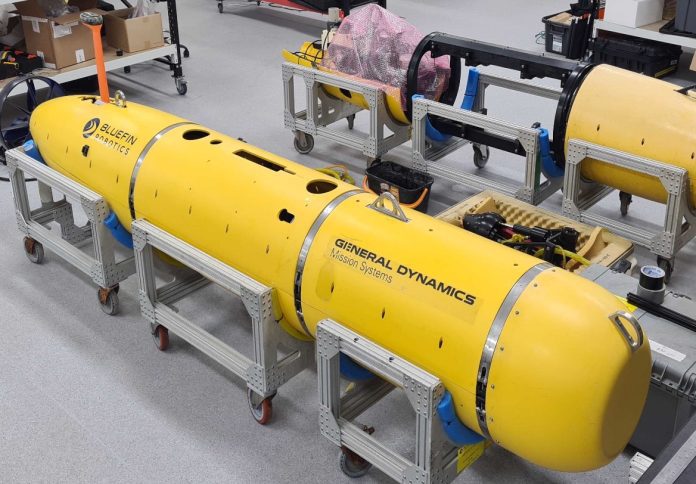
Under the agreement, Forge Photonics will provide its fibre optic gyroscope technology for Mission Systems’ underwater drones, informally referred to as “yellow submarines”. The companies said the system does not rely on GPS or acoustic transmissions, which can reduce detectability in subsea environments while also lowering costs compared to conventional alternatives.
“Our objective is for our technology to not only ‘live in yellow submarines’ but to help make them undetectable, and thus boost Australia’s deterrent military capability,” said Justin Wong.
He added that the company’s gyroscopic system uses “lasers, fibre optic cables and algorithms originally developed to detect gravitational waves” and that the technology was developed at ANU.
Mission Systems Director David Battle said local production of fibre optic inertial navigation systems could support Australia’s industrial capability. “This enables a higher degree of customisation and tuning to specific applications that has previously been impossible,” he said, adding that Forge’s technology has “particular attributes that make it compelling for undersea applications.”
Forge Photonics has received backing from investors including IP Group and superannuation fund Hostplus. IP Group Principal Eeshan Kulkarni said the agreement represents progress for the company’s technology development.
“Forge Photonics is developing a radically new architecture for navigation systems and this deal with Mission Systems is a significant step forward,” he said.
While the defence sector is an initial focus, Wong said the company is targeting broader applications. “Our technology can be used in much greater volume across industry, agriculture and eventually the automotive sector,” he said, adding that it is suited to “almost any autonomous vehicle needing affordable, precision, GPS-free navigation.”
The company said it is in discussions regarding potential pilot projects with a range of organisations, including a US-based navigation sensor company, a global automotive manufacturer and a European defence company.