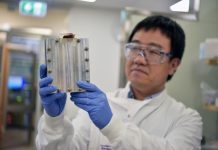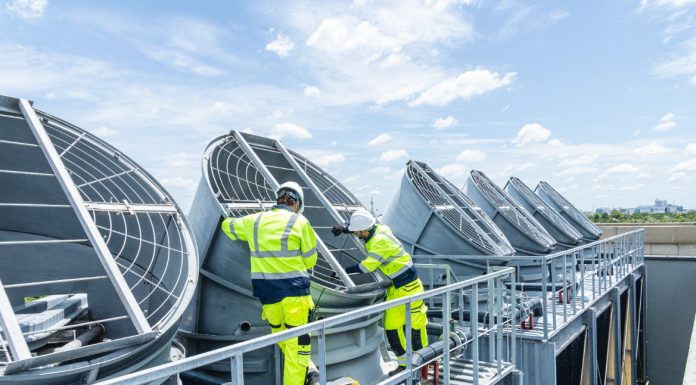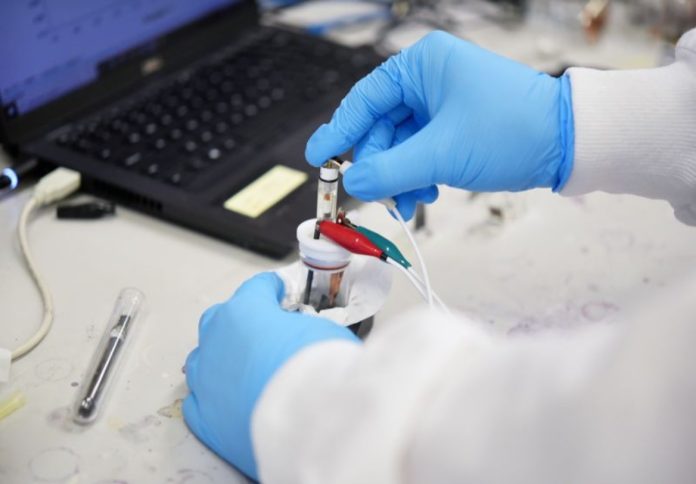
A researcher at the Australian Institute for Bioengineering and Nanotechnology (AIBN) is investigating whether plastic waste and seawater could be used alongside sunlight to produce hydrogen more efficiently.
Dr Yunqing Kang, an expert in advanced nanomaterials, is using an ARC Discovery Early Career Researcher Award (DECRA) to develop materials for a longer-term goal of converting plastic waste and water into hydrogen and other products.
“Ultimately, I want to use sunlight to power a system that converts plastic waste and water into hydrogen and other valuable products,” Dr Kang said.
According to AIBN, the project aims to reduce the energy required for hydrogen production by using molecules derived from plastic waste in place of the oxygen-producing reaction involved in conventional water splitting.
“Generating oxygen is the most energy-intensive part of the process,” Dr Kang said. “By combining the process with plastic molecules undergoing oxidation, the overall energy consumption for hydrogen production can be lowered.”
The research also focuses on seawater as an alternative water source. Dr Kang said seawater was abundant but presented challenges because of its high concentrations of salts and impurities.
“The challenge is designing catalysts that are both active and stable in its harsh environment,” he said.
AIBN said Dr Kang has developed a manufacturing method for producing thin, porous metal alloy coatings that can be used as catalysts. The materials use more abundant metals including iron, nickel and cobalt rather than precious metals and are being tested for seawater-splitting applications.
Dr Kang has also developed a semiconductor nanomaterial designed to detect very small concentrations of pollutants, including plastic-derived compounds, in complex water samples.
“For a sensor to work, the target molecule has to interact strongly with the material – this is the challenge,” he said.
AIBN said the research remains focused on developing the underlying nanomaterials, with Dr Kang acknowledging that the technologies are currently expensive and difficult to scale for industrial applications.
His longer-term aim is to develop small, scalable, solar-powered devices capable of processing plastic waste and water simultaneously to produce hydrogen and value-added chemicals.
“If hydrogen can be produced more efficiently and cheaply, it could support the transition away from fossil fuels as one part of the clean energy mix,” Dr Kang said. “We all should have a goal. We should have a dream.”