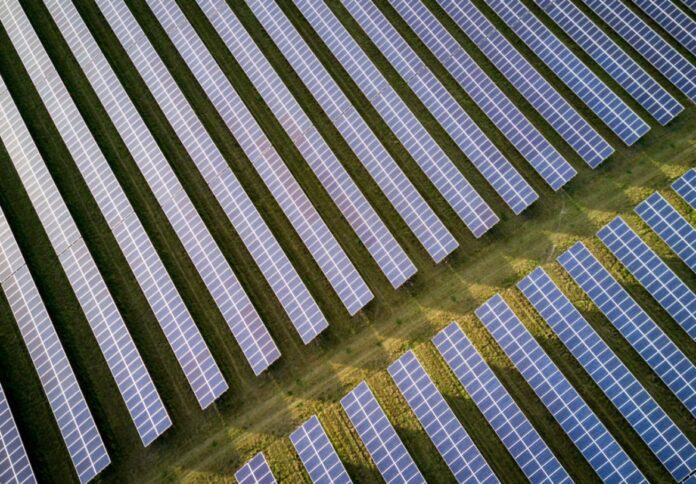
Australia is moving closer to ultra low-cost solar, but the Australian Renewable Energy Agency (ARENA) has warned that changes to how utility-scale solar projects are built and delivered will be needed to realise the opportunity.
According to ARENA’s Ultra Low-Cost Solar White Paper Update, released on 30 July 2026, advances in solar technology are continuing, but the speed and scale of large-scale project delivery has emerged as a key challenge.
In a news release, ARENA said ultra low-cost solar could provide cheaper renewable electricity and support the development of energy-intensive industries such as green metals and fuels.
“Australia needs a shift in focus towards how solar projects are delivered, not just what is installed,” ARENA CEO Darren Miller said.
ARENA said its analysis showed projects supported through its funding portfolio were demonstrating faster, more standardised and safer approaches to large-scale solar deployment. However, the agency identified workforce constraints, a more challenging investment environment, grid connection delays and inflation as pressures slowing deployment.
ARENA said its portfolio of ultra low-cost solar projects is testing new approaches to construction, integration and test-bed environments, with the aim of accelerating cost reductions across the sector this decade.
The agency highlighted projects including 5B’s modular solar systems, Built Robotics’ automated piling technology, Nextpower’s deployment technologies and Luminous Robotics’ installation systems, which it said are focused on reducing construction times, improving safety and enabling more efficient delivery at scale.
ARENA CEO Darren Miller said the potential for ultra low-cost solar remained significant as Australia entered the next phase of its energy transition.
“Australia has a strong foundation in solar, but the next phase will depend on how quickly we can translate innovation into industrialisation,” Mr Miller said.
“The progress we’re seeing today gives us confidence in what’s possible, but the next few years will be critical to turning this potential into reality.”
ARENA said its updated analysis highlights the need to move innovations from demonstration and testing into wider commercial deployment if Australia is to accelerate solar cost reductions.