Sponsored content by MRPeasy
Australian precision engineering and industrial instrumentation company CENMAC implemented ERP software when it was still a one-man operation. “I couldn’t imagine us growing to this size without MRPeasy,” says Jason Ford, Founder.
From precision engineering to precision instrumentation
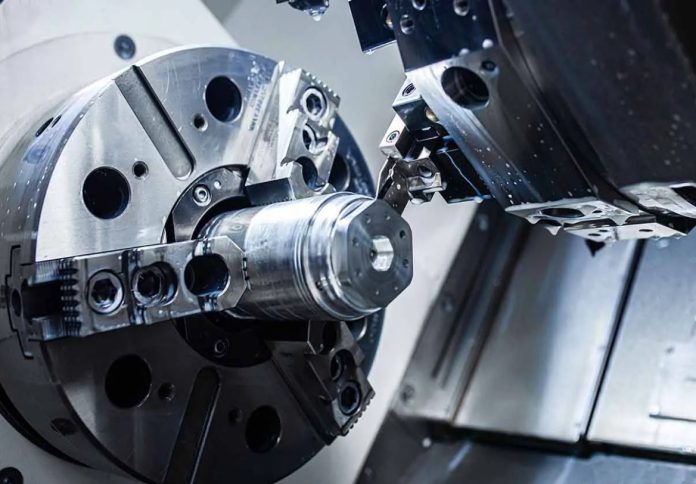
Centreline Machining (CENMAC) is an Australian precision engineering and instrumentation company serving industries such as food, mining, and industrial processing.
Founded in 2018 as a CNC machining operation, CENMAC has evolved into an expanding manufacturing business that, alongside its machining work, manufactures its own line of temperature instruments, pressure gauges, diaphragm seals, pressure transmitters, analytical equipment, pH and conductivity instruments, and flow meters for customers who need reliable measurement and monitoring equipment for demanding production environments.
Spreadsheets and accounting software became an obstacle
From the beginning, CENMAC’s work has required close control over quoting, job costing, materials, production orders, and delivery dates. Ford realized early on that he needed a system to bring these workflows together in one place.
“When it was just me, it was spreadsheets,” says Jason Ford, Founder. “I also used Xero, which is good for sending invoices and quotes, but it lacks on the manufacturing side.”
Ford also recalls needing a better way to assess whether each project was profitable. The details behind each job – the time spent, materials used, and true production cost – were difficult to track with spreadsheets and memory alone.
“I couldn’t keep track of costs. Whenever a repeat job came in, I needed to know whether the previous price was still good,” he says.
Ford began searching for a system to support the manufacturing side of the business. After trying out a few options, MRPeasy stood out for its balance of powerful functionality and user-friendliness.
“I used it, it was easy, and it made sense to me compared to other systems that were a bit clunky or a bit basic,” he says.
An early implementation to accommodate growth
Ford implemented MRPeasy while CENMAC was still a one-man company, before the wider team came on board. This gave him time to build the system around the company’s actual needs, starting with the essentials.
“I reckon we had MRPeasy up and running in 2-3 weeks,” he states.
That early adoption gave CENMAC a foundation it could grow with. Instead of waiting until spreadsheets became unmanageable, the company introduced a system while its processes were still simple enough to structure properly.
Achieving clear workflows without complicating things
With MRPeasy, CENMAC was able to integrate several core workflows into a single system. The team uses it for CRM, manufacturing orders, purchasing, inventory tracking, job management, and Xero integration. Instead of relying on paperwork, spreadsheets, or separate systems, the business now has a clear process for fulfilling orders.
“There’s a flow from quote to order confirmation to production to shipping, which has helped us a lot,” Ford says.
MRPeasy has also made it easier for different team members to access the information they need. Shop floor employees use the system to clock time, view drawings, add setup notes, and attach supporting information through Google Drive. This means production knowledge can be built up inside the system rather than sitting in one person’s head.
“By the time the job is done, I can just confirm it, and then it goes to shipping,” Ford says.
Because each team member only needs to use the parts of the system relevant to their role, CENMAC has been able to introduce MRPeasy without overwhelming the shop floor.
“We’ve got permissions set up to keep the noise away from people who don’t need to see certain parts of the system,” Ford says.
Growth feels unimaginable without a proper system
Looking back, Ford thinks it would have been much harder for CENMAC to reach its current size without a manufacturing system in place. By implementing MRPeasy early, the company created a foundation that could support more part numbers, more routings, more work orders, and a growing team.
“I couldn’t imagine us growing to this size without MRPeasy,” he says. “There would be too much paperwork, too many spreadsheets, and too many things getting lost or forgotten.”
For manufacturers still relying on spreadsheets, Jason’s main advice is to put a proper system in place before the business becomes too complex.
“I’d say do it sooner rather than later because it is easier when you’re small,” he says. “We’ve now got thousands of columns, routes, and part numbers. Back when I started, there were maybe 10. When you only have a small number of part numbers or a small number of people, it’s much easier.”
This article contains information provided by MRPeasy and is intended for general use only. It does not take into account your personal, professional, or business circumstances.