

As Australia looks to strengthen its domestic manufacturing base, regional manufacturers face the challenge of investing in advanced technology, developing skilled workers and securing a sustainable pipeline of projects.
In an exclusive interview with Australian Manufacturing, Bowhill Engineering CEO Jodie Hawkes discusses the opportunities and pressures shaping the sector.
For South Australian manufacturer Bowhill Engineering, strengthening Australia’s manufacturing capability requires more than investing in machinery. It also involves developing people, improving production processes and ensuring local businesses can compete for complex projects.
Based in South Australia’s Murraylands, Bowhill Engineering is a structural steel manufacturer and engineering business delivering fabrication solutions for infrastructure, transport, defence, energy and industrial projects. The company was named a 2026 Telstra Best of Business Awards State Winner and received the Best Medium Business award at the Australian Manufacturing Awards.
Chief executive officer Jodie Hawkes said Australia had strong engineering capabilities, but converting that capacity into a sustainable pipeline of projects remained a challenge.
“Australia has strong engineering capability and manufacturers prepared to invest in complex work. The challenge is converting that capability into a sustainable pipeline of projects,” Hawkes told Australian Manufacturing.
She identified mining, defence, transport, energy and major infrastructure as significant opportunities for local manufacturers, particularly in projects requiring complex engineering and close collaboration.
“Involving manufacturers earlier in design and procurement can help projects make better use of the capability already here,” she said.
Investing in advanced manufacturing
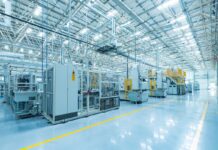
Bowhill has invested approximately $11 million in facilities and equipment to expand its advanced manufacturing capabilities.
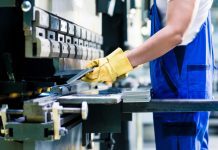
The investment includes three seven-axis IGM robotic welding systems operating along a 60-metre track, an Okuma MCR-A5CII double-column CNC machining centre and a B5 workshop equipped with a 100-tonne overhead crane.
Hawkes said the robotic systems supported consistent, repeatable welds, while CNC machining enabled precise finishing of large welded components.
“Bringing these processes together with heavy fabrication gives us greater control over production and expands the work we can take on,” she said.
The investment has also created a need to develop new workforce capabilities in robotic programming and CNC machining. Hawkes said training and process development remained important as the company integrated these technologies into its operations.
Addressing workforce and industry challenges
Skills shortages, rising operating costs, materials lead times and uncertainty around project timing remain among the challenges facing Australian manufacturers.
Hawkes pointed to Weld Australia’s forecast of a national shortfall of 70,000 welders by 2030, highlighting the importance of developing domestic skills.
Bowhill is responding through apprenticeships, traineeships and work experience opportunities, alongside leadership development and ongoing employee training.
The company’s workforce development approach was recognised at the 2025 Australian Training Awards, where it received the Small Employer of the Year award.
“We take growing our own seriously,” Hawkes said, adding that providing career development opportunities and a supportive workplace was central to retaining skills in regional South Australia.
Strengthening domestic manufacturing
Looking ahead, Hawkes said sustained investment from government and industry would be necessary to retain Australia’s manufacturing capabilities.
She identified business tax settings, reducing unnecessary red tape and improving procurement practices as areas requiring attention. She also called for transparent trade rules and consistent verification that local and imported steelwork met applicable Australian requirements.
“Manufacturers need the confidence to invest in equipment, develop people and commit to the future here,” she said.
As Chair of Regional Development Australia Murraylands and Riverland and Deputy Chair of Regional Development South Australia, Hawkes also highlighted the importance of collaboration between businesses, industry groups and government.
She said manufacturers could contribute by continuing to invest in technology and workforce development while bringing practical industry experience into policy discussions.
“Working together gives us a stronger voice and a clearer path to changes that help Australian manufacturing grow,” Hawkes said.