Australian manufacturers have played a central role in supporting the first maintenance activity conducted on a United Kingdom nuclear-powered submarine in Australia under the AUKUS partnership, with the Australian Submarine Agency highlighting the milestone as a demonstration of the country’s growing industrial capability.
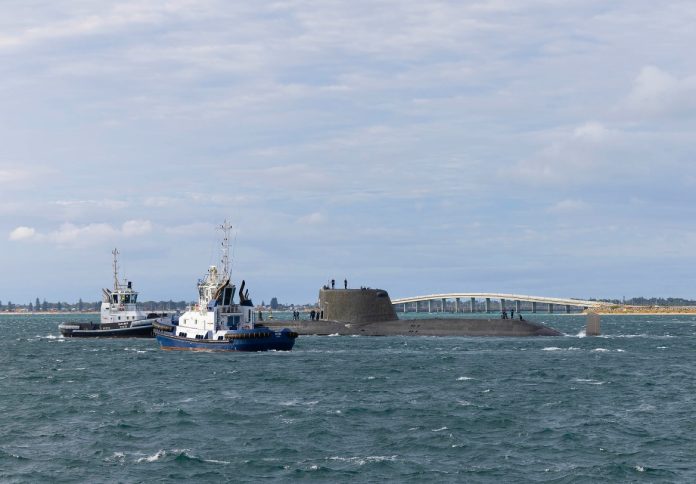
In a news release, the Australian Submarine Agency said Australian Safety Engineers Pty Ltd’s locally designed and manufactured High-Pressure Air Compressor (HPAC) was used during the scheduled maintenance period for the Royal Navy’s Astute-class submarine HMS Anson at HMAS Stirling in Western Australia.
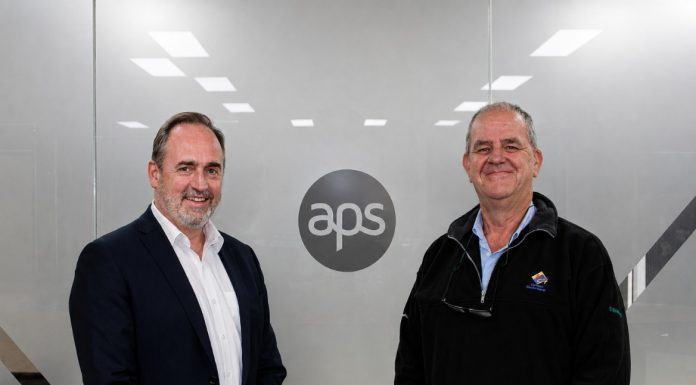
Deputy Prime Minister Richard Marles visited the Canning Vale-based company last week following the opening of the WA Submarine Discovery Centre, with the agency saying the visit highlighted opportunities being created for Australian industry and workers through AUKUS while strengthening Australia’s defence capability.
Working alongside Australia’s Submarine Sustainment Partner, ASC Pty Ltd, Australian Safety Engineers deployed its mobile HPAC plant for the first time to provide pier-side services at Diamantina Pier, HMAS Stirling.
According to the agency, the HPAC plant was engineered to meet UK and US requirements and is designed to support essential submarine systems. It was also used to charge Extended Duration Breathing Apparatus cylinders to help crews respond to incidents and support safe submarine operations.
The agency said Australian Safety Engineers was one of 17 Australian companies involved in the maintenance period, with local businesses providing services including fabrication, hydraulic hose supply, non-destructive testing, scaffolding, HVAC, pure water delivery and specialist mechanical support.
In total, 34 locally manufactured components were produced for the maintenance activity, including parts designed specifically for HMS Anson. Several of those components have since been installed aboard the Royal Navy submarine.
The Australian Submarine Agency described the work as Australia’s most significant contribution to nuclear-powered submarine sustainment since the launch of the AUKUS Optimal Pathway three years ago, saying it reflected the expanding role of Australian industry in supporting the partnership.
The maintenance period also involved contributions from across the AUKUS partnership. Earlier this month, Marles visited QinetiQ in the United Kingdom, where he viewed additive manufacturing technology that was also deployed at HMAS Stirling during the maintenance of HMS Anson.
Vice Admiral Jonathan Mead, Director-General of the Australian Submarine Agency, said the maintenance period demonstrated Australia’s growing capability and the value of cooperation between AUKUS partners.
“The visit by HMS Anson clearly showed that Australia is on track to host Submarine Rotational Force – West from 2027, as we build our skills and experience in supporting and maintaining conventionally-armed, nuclear-powered submarines at HMAS Stirling,” Mead said.
“This maintenance period once again demonstrated the power of an integrated trilateral workforce and industry base. By combining our expertise, resources and technological strengths, we are achieving progress faster than any one nation could deliver on its own.”
According to the agency, the maintenance period involved approximately 2,500 hours of Australian industry effort and around 620 hours of trilateral uniformed work, including Royal Australian Navy diving support.
The agency said the work has further strengthened Australia’s capacity to undertake routine and scheduled maintenance on UK and US nuclear-powered submarines ahead of the planned commencement of Submarine Rotational Force – West next year, while continuing to build the workforce, industrial capability and operational experience needed to support Australia’s future nuclear-powered submarine program under AUKUS.