
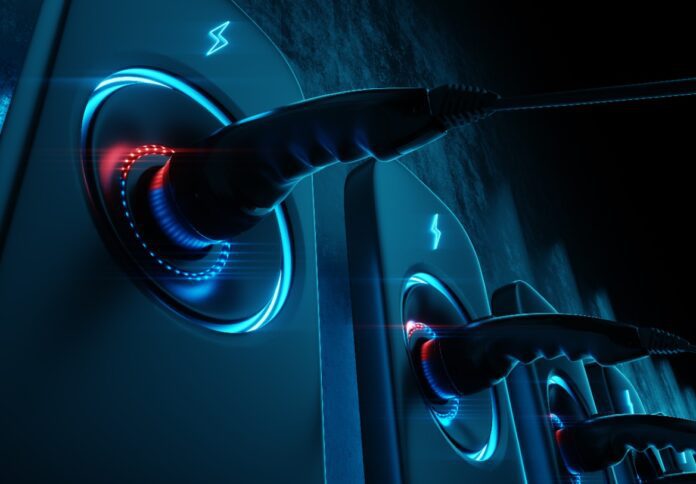
Manufacturing and supply-chain emissions from lithium-ion batteries could increase tenfold by 2050 as global demand rises, according to a University of Melbourne-led study that found cleaner production alone would not be enough to limit the impact.
The research, published in One Earth, modelled demand for batteries used in electric cars, vans, buses, trucks and battery energy storage systems, projecting that demand could increase twentyfold by 2050.
The study examined emissions across raw material production, component manufacturing, battery production and end-of-life treatment from 2024 to 2050. It found that measures such as switching battery chemistries, using cleaner electricity and recycling materials would be essential, but insufficient to offset projected emissions growth.
Associate Professor Wen Li from the University of Melbourne’s Faculty of Engineering and Information Technology said reducing demand for new batteries offered another significant opportunity to cut emissions.
“Encompassing demand-side decarbonisation strategies, such as reducing battery sizes, extending battery lifetimes and promoting shared mobility, could help reduce the predicted global carbon dioxide (CO?)-equivalent LIB emissions over that period to 2050 by around half,” Li said.
The researchers estimated that without additional demand-side measures, the global battery supply chain could generate 19–23 billion tonnes of CO?-equivalent emissions through to 2050. Combining ambitious supply- and demand-side strategies could reduce this to 9–12 billion tonnes.
Supply-side measures were estimated to account for 3.5–4.7 billion tonnes of avoided emissions, while demand-side strategies could contribute a further 6–7 billion tonnes, according to the study.
Lead author Dr Haiwei Zhou said future research would examine regional differences in mining, refining, electricity production and environmental pressures.
“For policy and industry, battery decarbonisation should move beyond regulating production emissions alone,” Zhou said.
Co-author Professor Prakash Singh from the University of Melbourne’s Faculty of Business and Economics said policies could support longer battery lifetimes, appropriate battery sizing, higher utilisation and second-life applications.
The research involved collaborators from the Chinese Academy of Sciences and the University of Sheffield. The team said it also planned to investigate whether similar supply- and demand-side dynamics applied to other clean-energy supply chains, including wind turbines and solar panels.