The Australian Fashion Council (AFC) has launched a feasibility study for what it says would be Australia’s first Clothing Smart Factory, a project aimed at assessing the viability of a technology-enabled manufacturing facility designed to support local garment production.
According to the AFC, the study is intended to develop a blueprint for a next-generation clothing manufacturing facility capable of supporting research and development, product testing and small-scale production at a commercially viable cost.
The initiative is backed by Epson Australia, Investment NSW through its Fostering Innovation Sponsorship Program, and the NSW Government’s Fashion Sector Strategy.
The research will be undertaken by a consortium comprising RMIT University, Swinburne University of Technology and the University of Technology Sydney (UTS), bringing together expertise in advanced manufacturing, textile technology and workforce development.
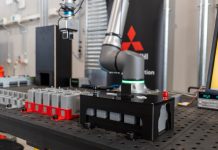
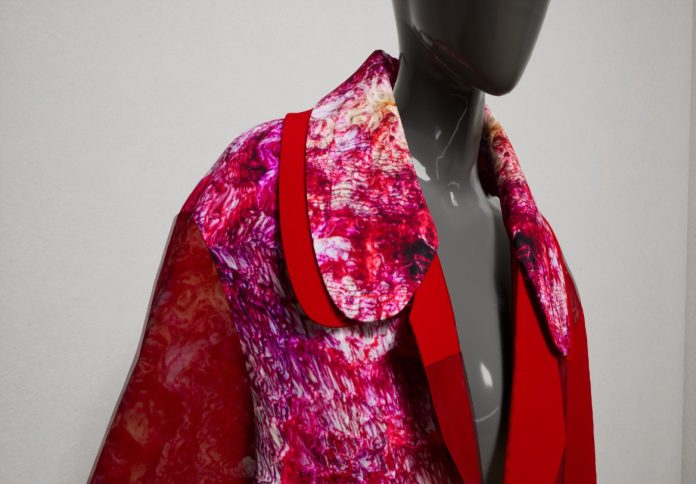
The proposed Smart Factory will investigate a Cut, Make and Trim (CMT) facility equipped with digital pattern making, digital textile printing, CNC cutting, automated production line machinery and advanced finishing technologies. The completed study will examine market demand, technical requirements, workforce and skills needs, financial modelling, and opportunities for government and industry co-investment.
NSW Minister for Innovation, Science and Technology Anoulack Chanthivong said the state government viewed the initiative as an opportunity to strengthen local manufacturing capability.
“The NSW Government is proud to support initiatives that keep fashion and textile manufacturing right here in New South Wales. A clothing smart factory has the potential to create skilled local jobs, strengthen our advanced manufacturing base and broaden our innovation ecosystem,” Chanthivong said.
“This feasibility study is an important step in building the networks across academia and industry to enhance our manufacturing expertise and competitiveness in this sector.”
AFC General Manager Sam Delgos said the study would explore new approaches to rebuilding Australia’s clothing manufacturing capability.
“Australia has extraordinary design talent, but for decades we’ve watched our clothing manufacturing capability move offshore. If we’re serious about building a globally competitive fashion industry, we need the infrastructure to support it,” Delgos said.
“This feasibility study is our blueprint; bringing together industry, government and Australia’s leading universities to explore a new model for advanced, on-demand production. We’re building the case for long-term investment in sovereign manufacturing, future skills and local production.”
Epson Australia and New Zealand Managing Director Craig Heckenberg said digital textile printing technology could support more localised production.
“Digital textile printing is transforming how garments are designed and made, reducing waste and water use while enabling local, on-demand production. We are delighted we can bring our technology and expertise to a project that will reshape the future of Australian fashion manufacturing,” Heckenberg said.
Representatives from the participating universities said the project would draw on their expertise in design, manufacturing technologies and workforce planning to assess the feasibility of the proposed facility.
RMIT School of Fashion and Textiles Dean Professor Alice Payne said the university aimed to help develop a sustainable and scalable model for Australian brands, while Swinburne Executive Dean Professor Blair Kuys said the study would support opportunities in advanced and AI-enabled fashion manufacturing. UTS Dean Professor James Bennett said the university would contribute its expertise through a workforce analysis as part of the project.
The AFC said the initiative aligns with the NSW Government’s Fashion Sector Strategy and forms part of its broader efforts to strengthen Australia’s fashion ecosystem, alongside work on export development, workforce capability and the National Manufacturing Strategy.
The feasibility study is expected to be completed in late 2026, ahead of an industry launch event hosted by the AFC.