Australian manufacturing-linked power electronics company EcoJoule Energy says underinvestment in voltage management technologies across distribution networks is costing energy consumers about $1.1 billion a year in potential savings, alongside an estimated $317 million in annual appliance damage.
In a media release, the manufacturer said the losses are being driven by inefficiencies in low-voltage parts of the grid, despite ongoing multi-billion-dollar investments in transmission-level infrastructure such as synchronous condensers aimed at improving system stability.
EcoJoule Energy estimates that a nationwide Conservation Voltage Reduction program could deliver average household savings of about $110 per year on electricity bills, with a further $35 annually in avoided appliance replacement costs due to improved voltage control.
EcoJoule Energy Founder and CEO Mike Wishart said growing electrification trends, including rooftop solar, electric vehicles and household electrification, were intensifying pressure on distribution networks.
“We’re investing heavily in transmission infrastructure, but the reality is most Australians experience the grid at the distribution level,” Dr Wishart said. “If we don’t address voltage inefficiencies there, households will continue to miss out on significant savings while absorbing unnecessary costs.”
He added that without targeted investment, inefficiencies would continue to compound. “This isn’t just about energy waste, it’s about real dollars lost by households every year and avoidable damage to appliances. Smarter voltage management is one of the most immediate and cost-effective ways to return those savings to consumers,” he said.
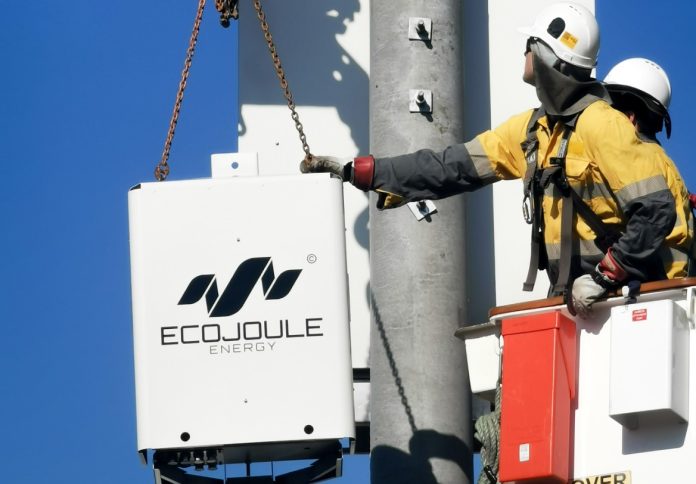
The manufacturer said the issue of overvoltage is being increasingly recognised globally, noting recent deployments of its EcoVAR STATCOM technology across the UK, Europe and Asia. The system is a pole-mounted power electronics device designed to regulate voltage and improve network stability at the distribution level.
EcoJoule Energy also highlighted its recent $15 million investment round led by Clean Energy Finance Corporation and Ellerston Capital, aimed at scaling deployment of its technologies in Australia and overseas. Its systems are now installed on four continents.
Strategic adviser Ty Christopher, Director of the Energy Futures Network at the University of Wollongong, said improving efficiency in existing infrastructure was critical to the energy transition.
“The cheapest and cleanest energy is the energy that never has to be used in the first place,” he said. “Managing overvoltage means less energy is wasted and more clean solar energy can be exported.”
He added that many reliability challenges were emerging at distribution level rather than transmission. “If we do not start approaching stability issues on the distribution grid with the same enthusiasm as the transmission grid, reliability will continue to decline,” he said.
Chief Commercial Officer Martin van der Linde said network operators were facing increasing constraints at the edge of the grid, particularly as solar and electric vehicle uptake accelerates.
“If we want to continue connecting solar, EVs and new loads, we need to invest not just in the transmission backbone, but in the distribution network that connects directly to customers,” he said.
He said distributed technologies such as EcoJoule’s STATCOM systems could improve power quality and reduce the need for large-scale network upgrades by making better use of existing infrastructure.
The company said a coordinated approach combining transmission investments with distribution-level technologies would be required to maintain grid reliability, while continuing to support electrification and renewable energy integration.
EcoJoule Energy, a manufacturing-focused company in the power electronics sector, said its technology portfolio also includes EcoSTORE, a battery energy storage system designed to absorb excess solar generation, improve power quality and support grid stability.