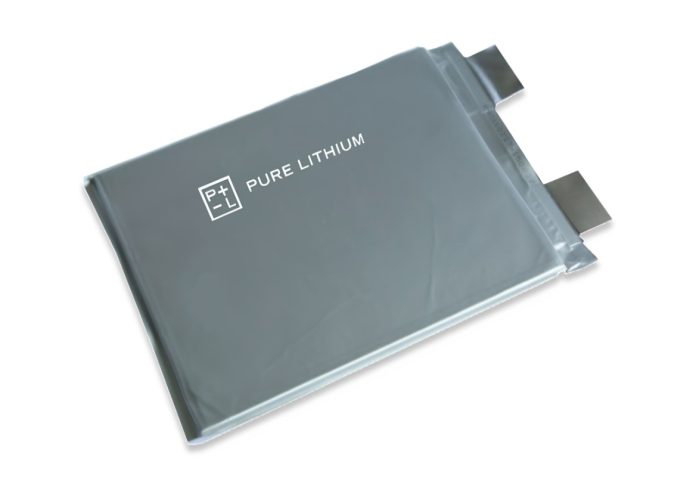
Pure Lithium Corporation has secured an Australian patent covering its lithium metal anode and battery technology, which the company says could support the development of domestic battery manufacturing using locally sourced materials.
The Australian patent office granted Pure Lithium patent AU2025271196, titled “Lithium metal anode and battery”.
According to the company, the patent covers its lithium metal anode technology and its integration into a complete lithium metal battery.
Pure Lithium said the patent could support efforts to establish an Australian battery production supply chain spanning lithium extraction through to finished battery manufacturing.
“Australia is the world’s largest producer of lithium, yet it does not produce a single battery; all of that value is captured offshore,” said Pure Lithium founder, chairman and CEO Emilie Bodoin.
Bodoin said Australia had the resources and capabilities needed to support next-generation battery manufacturing.
“Australia possesses the natural resources, technical talent, and regulatory environment to be an excellent jurisdiction for next-generation lithium metal battery manufacturing,” she said.
The company said Australia’s resource base could potentially support both sides of its battery technology, noting the country’s lithium production and vanadium deposits, which it identifies as the cathode material for its Gen-2 battery.
Pure Lithium said its lithium metal battery does not use graphite, cobalt, nickel or manganese, materials it describes as having supply chain vulnerabilities because of their predominant sourcing or refining in China.
The company said its technology is intended to support applications currently served by lithium-ion batteries, including drones, smartphones, electric scooters, grid-scale energy storage and electric vehicles.
The Australian patent adds to Pure Lithium’s portfolio of more than 160 patents and patent applications across multiple jurisdictions.
The company said its vertically integrated approach combines lithium metal anode production with battery manufacturing, with the aim of reducing materials costs while supporting battery performance.
“Securing patent protection for our lithium metal anode and battery technology in Australia is a significant milestone in our global strategy of establishing battery production hubs in key markets around the world,” Bodoin said.
Pure Lithium said the patent strengthens its position to pursue battery production in Australia and its broader objective of developing battery supply chains that are less dependent on China.